
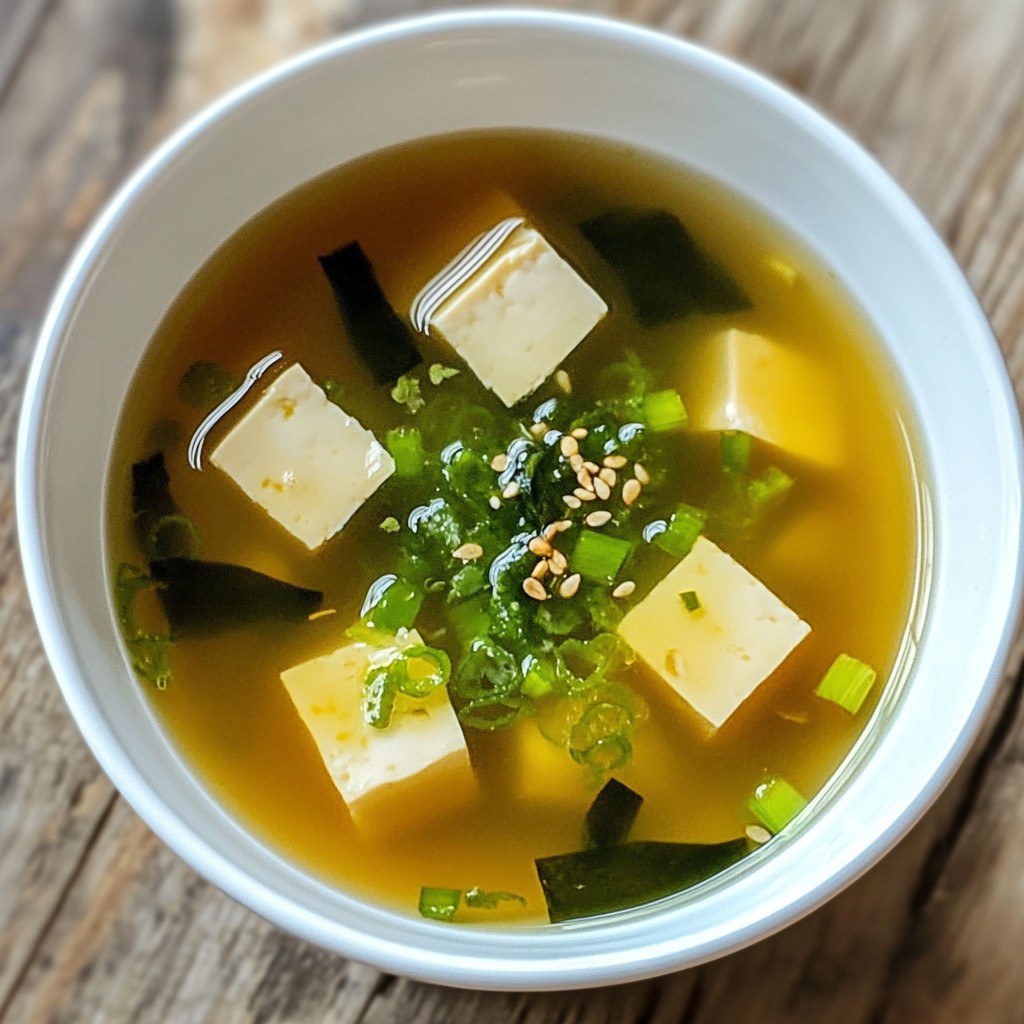
Are you craving a warm bowl of comfort that takes only ten minutes to whip up? Look no further! This quick and easy miso soup recipe is perfect for busy days. You just need a few simple ingredients like miso paste, silken tofu, and wakame seaweed to create a soothing meal. In this blog post, I’ll walk you through each step, from boiling water to adding your favorite toppings. Let's dive in!
Why I Love This Recipe
- Quick and Easy: This recipe takes only 10 minutes to prepare, making it perfect for a quick meal or snack.
- Customizable Flavors: With options for white or red miso paste, you can easily adjust the flavor profile to suit your taste.
- Nutritious Ingredients: Packed with protein from tofu and rich in vitamins from seaweed, this soup is both healthy and satisfying.
- Beautiful Presentation: Serve in clear bowls to showcase the vibrant colors of the ingredients, making it visually appealing.
Ingredients
Main Ingredients
- 4 cups water
- 2 tablespoons miso paste (white or red)
- 1 cup silken tofu, cubed
- 1 cup dried wakame seaweed, rehydrated
Optional Ingredients
- 1 clove garlic, minced
- 1 teaspoon toasted sesame oil
- Salt, to taste
- Green onions, for garnish
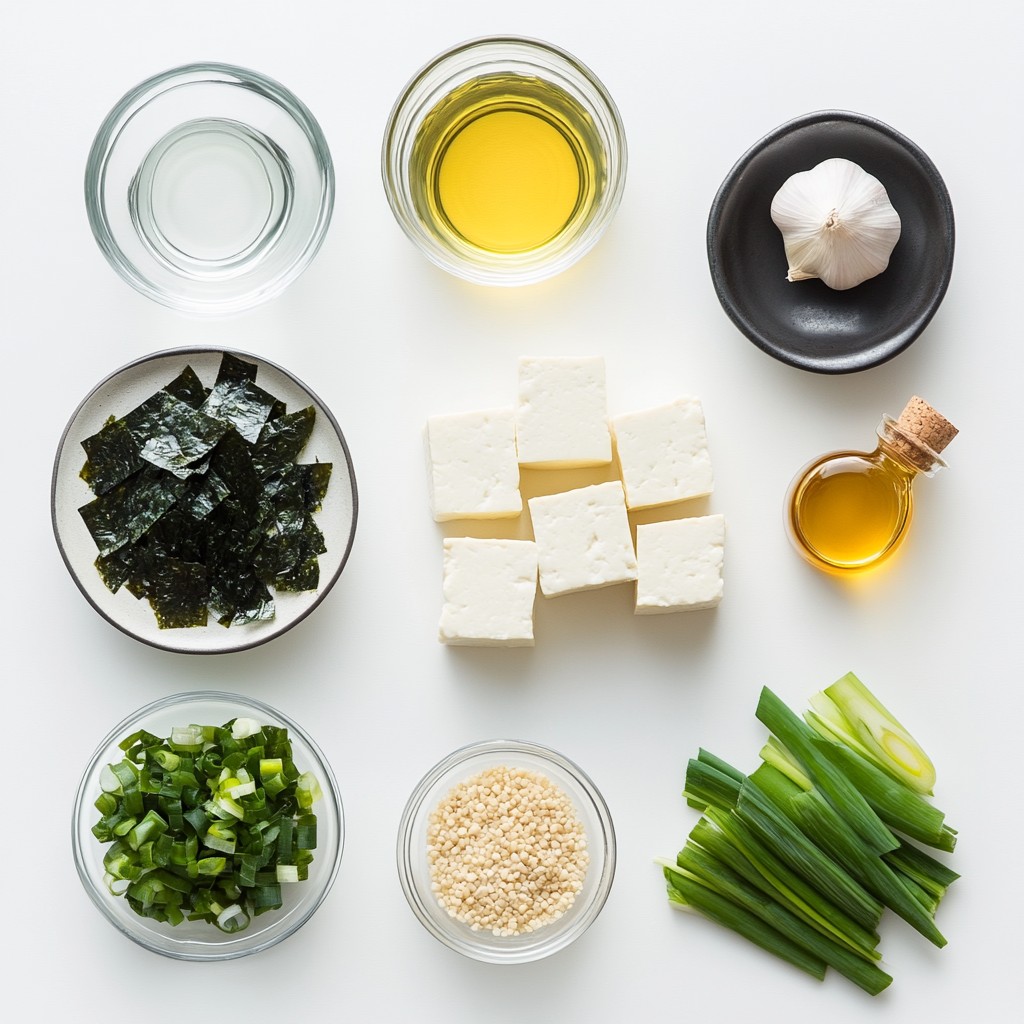
Miso soup starts with simple, fresh ingredients. First, you need water. Four cups will give you a good base. Next, choose your miso paste. You can use white for a mild taste or red for a stronger flavor. Both work well.
To add some texture, include silken tofu. Cut it into small cubes. This will give your soup a creamy feel. Then, you’ll want wakame seaweed. Soak a cup of dried seaweed in water until it softens. Once it’s ready, chop it up before adding it to your soup.
Now for the optional ingredients. Minced garlic adds a nice depth if you like a bolder flavor. A teaspoon of toasted sesame oil will give it a warm, nutty aroma. Salt is key, too. Adjust it to your taste. Finally, green onions are perfect for a fresh garnish. They add color and a bit of crunch.
These ingredients come together to create a warm and comforting bowl of miso soup. You can customize the recipe with your favorite flavors.
Step-by-Step Instructions
Cooking the Base
To start, you need to boil water in a medium pot. Pour in 4 cups of water and heat it over medium flame until it reaches a gentle boil. Once boiling, reduce the heat to low. Then, add 2 tablespoons of miso paste. Stir with a ladle or whisk until the miso is fully dissolved. Avoid boiling the soup after this point, as high heat can spoil the good benefits of the miso.
Adding Key Ingredients
Now, it's time to introduce the key ingredients. Add 1 cup of silken tofu, cut into small cubes. Next, add 1 cup of dried wakame seaweed, which you should soak in water to rehydrate and then chop. Let the soup simmer gently for about 3 minutes. This step helps all the flavors blend together nicely.
Final Touches
If you like, you can make the soup richer. Add 1 clove of minced garlic and 1 teaspoon of toasted sesame oil for a nutty aroma. Stir well and let the soup cook for another minute. After that, taste the broth and add salt as needed. When you finish, ladle the soup into bowls and sprinkle with green onions for a fresh touch.
Tips & Tricks
Miso Tips
Choosing between white and red miso is key. White miso is sweeter and milder. It works great for light soups. Red miso has a stronger flavor and saltiness. It adds depth to your broth. You can mix them too for a unique taste.
To store leftover miso paste, keep it in the fridge. Use an airtight container. This keeps it fresh for weeks. If you have a lot, freeze it in small portions. Use ice cube trays for easy use later.
Texture Enhancements
For the best tofu, use silken tofu. It adds a creamy feel to your soup. You can also try firm tofu for a bit of chew. Both options work well in miso soup.
Adding more nutritional elements makes the soup better. You can toss in spinach or bok choy. These greens boost flavor and health. Another option is to add mushrooms. They give an earthy taste.
Serving Suggestions
Miso soup pairs well with steamed rice. The rice absorbs the flavors nicely. You can also serve it with a fresh salad. This adds crunch and balance to the meal.
For presentation, use clear bowls. This shows off the vibrant colors of the soup. Top each bowl with green onions for a pop of color. Consider a sprinkle of sesame seeds for added flair.
Pro Tips
- Choose Your Miso Wisely: White miso is sweeter and milder, while red miso offers a more robust and salty flavor. Select based on your taste preference!
- Perfect Tofu Texture: Silken tofu is ideal for a creamy texture, but if you prefer more bite, consider using firm tofu instead.
- Wakame Variations: Dried wakame is easy to find, but feel free to experiment with other seaweeds like kombu or dulse for different flavors.
- Garnish for Impact: Fresh herbs like cilantro or shiso can elevate your soup's presentation and flavor profile, so don't hesitate to get creative!
Variations
Vegetarian & Vegan Options
You can make miso soup plant-based easily. Use vegetable broth instead of water. This adds more flavor. Switch silken tofu for other plant proteins like edamame or tempeh. Both options give a nice texture and protein boost.
Flavor Enhancements
Want to spice up your soup? Try adding ginger or chili flakes. They will give the soup a nice kick. You can also mix in different vegetables like spinach, mushrooms, or carrots. Each veggie adds its own taste and nutrients.
Regional Twists
Miso soup varies around the world. In Japan, you might find clams or fish added. In Korea, they use gochujang for heat. Feel free to swap ingredients based on what you like. This keeps the soup fresh and fun to make!
Storage Info
Storing Leftovers
To store leftover miso soup, let it cool to room temperature first. Pour it into an airtight container. This helps keep the flavor fresh. You can store it in the fridge for up to three days. After that, the taste may start to fade.
Reheating Instructions
When reheating, use a pot on low heat. This helps preserve the flavor. Stir often to heat it evenly. If the soup tastes less strong after reheating, add a little more miso paste or salt. This will bring back the flavor.
Freezing Guidelines
Yes, you can freeze miso soup! However, it’s best to freeze it without tofu or seaweed. These ingredients change texture when thawed. Store the soup in freezer-safe containers. When ready to eat, thaw it overnight in the fridge. Reheat gently on the stove, and add fresh tofu and seaweed for the best taste.
FAQs
What is miso paste made of?
Miso paste is made from three main ingredients: soybeans, salt, and koji. Koji is a mold that helps ferment the soybeans. This fermentation process gives miso its rich flavor. Some types of miso also include rice or barley. The color of miso can vary from white to red, affecting its taste. White miso is sweeter, while red miso is more robust and salty. Both types are packed with umami flavor, making them perfect for your soup.
Can I make miso soup without tofu?
Yes, you can make miso soup without tofu. If you prefer, you can skip the tofu altogether. There are many tasty alternatives. For example, you can add mushrooms for a meaty texture. Try adding carrots or spinach for extra nutrition. You can also use noodles to make the soup heartier. These changes can still give you a warm and comforting bowl of miso soup.
How can I make miso soup spicier?
To make your miso soup spicier, you have a few options. You can add a pinch of chili flakes or a dash of hot sauce. Sriracha is a great choice for adding heat. Another option is to mix in some sliced jalapeños for a fresh kick. If you enjoy ginger, try adding grated ginger for warmth and spice. These simple additions can elevate your soup and make it your own.
In this article, I covered how to make miso soup. We explored the main and optional ingredients, detailed step-by-step instructions, and shared helpful tips for enhancing flavor and texture. I also offered variations, storage information, and answered common questions.
Miso soup is flexible and can suit any taste or diet. Remember, cooking is about creativity. Enjoy making your own unique version of this classic dish!