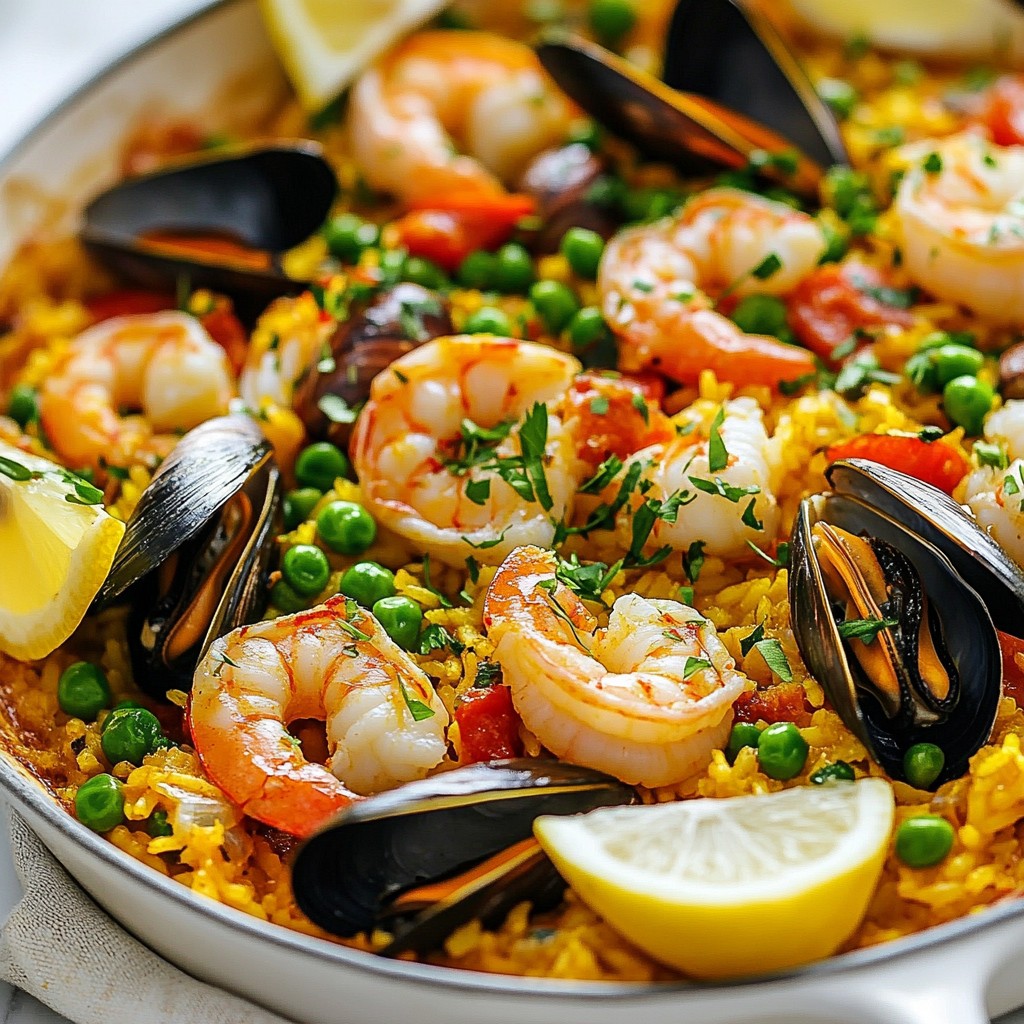
Are you ready to dive into the world of Spanish Seafood Paella? This flavorful dish is not only delicious but also easy to make at home. With fresh seafood, rich spices, and perfectly cooked rice, you’ll transport your taste buds to sunny Spain. In this guide, I’ll share a step-by-step recipe, expert tips, and variations to customize your paella. Let's get started on your culinary adventure!
Why I Love This Recipe
- Bold Flavors: This paella bursts with vibrant flavors from the smoked paprika, saffron, and fresh seafood, making every bite a delightful experience.
- Colorful Presentation: The combination of colorful ingredients not only makes the dish visually appealing but also adds to the overall dining experience.
- Comfort Food: This dish brings a sense of warmth and comfort, perfect for sharing with family and friends during gatherings.
- Versatile Ingredients: You can easily customize the seafood selection or add vegetables, making it a flexible recipe that suits various tastes.
Ingredients
List of Seafood Ingredients
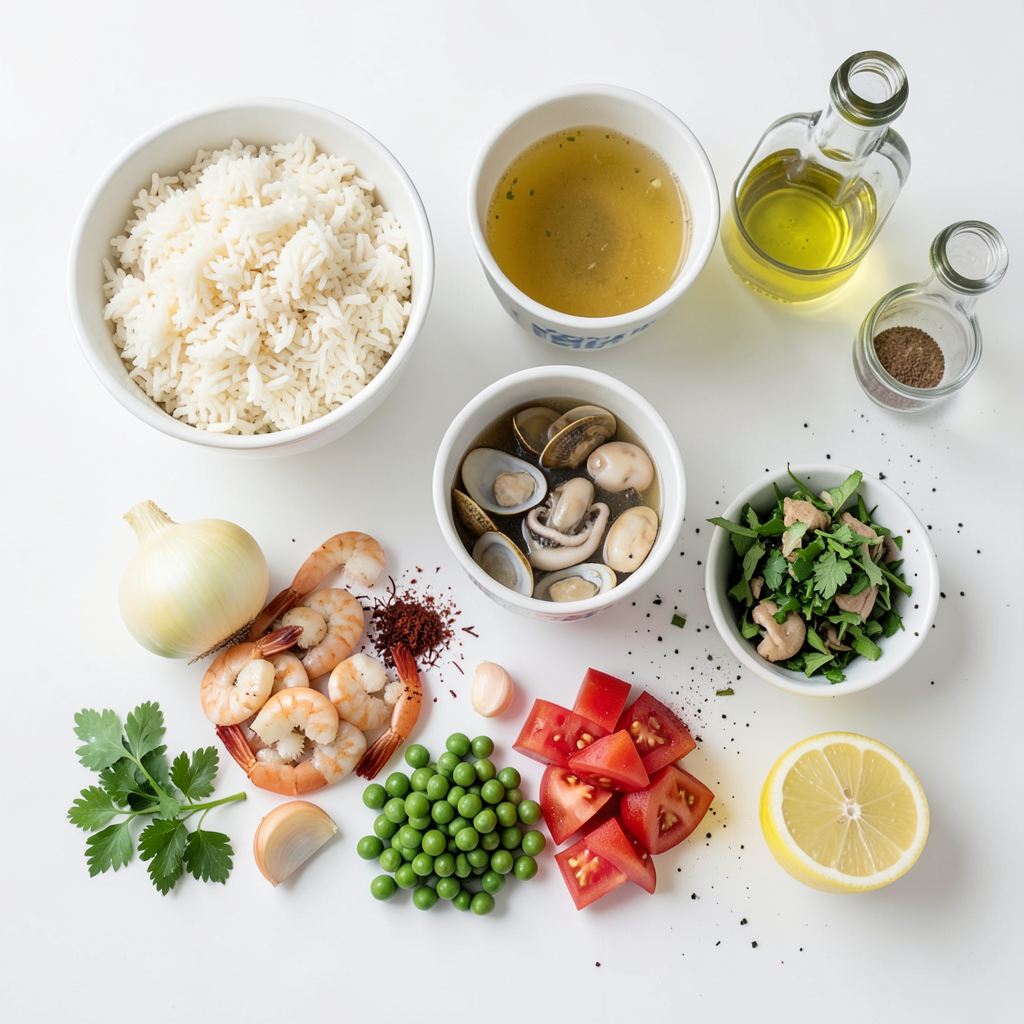
- 500g mixed seafood (shrimps, mussels, clams, squid)
- To choose fresh seafood, look for bright colors and a clean smell. The shells should be closed. Fresh shrimp should feel firm and springy.
Rice and Broth
- 2 cups Bomba rice (or Arborio rice)
- 4 cups warm fish or seafood broth
- Bomba rice absorbs flavor well. Arborio gives a creamy touch.
Vegetables and Seasonings
- Onion, garlic, red bell pepper, and tomatoes
- Essential spices: smoked paprika and saffron
- Use sweet red bell peppers for a nice balance. Smoked paprika adds depth, while saffron gives a lovely golden hue.
Garnishes and Extras
- Frozen peas, lemon wedges, fresh parsley
- Recommended oils and seasonings
- Peas bring color and sweetness. Fresh parsley adds a burst of freshness, while lemon offers a zesty kick.
Step-by-Step Instructions
Preparing the Base
Begin by heating 2 tablespoons of olive oil in a large paella pan over medium heat. Once the oil is hot, add one finely chopped onion. Sauté this for about 5 minutes. You want the onion to be soft and clear. Next, add 4 minced garlic cloves and 1 diced red bell pepper to the pan. Cook for another 2 minutes until it smells great and the pepper softens.
Creating the Sauce
Now, it’s time to make the sauce. Add 2 finely chopped ripe tomatoes to the pan. Sprinkle in 2 teaspoons of smoked paprika and pour in the saffron broth you prepared. Let this mixture simmer for about 5 to 7 minutes. This step helps all the flavors blend well. You want the tomatoes to soften and create a nice sauce.
Cooking the Rice
Next, stir in 2 cups of Bomba rice. Make sure each grain gets coated in the sauce. Toast the rice for 2 to 3 minutes. This adds depth to the flavor. Slowly pour in 4 cups of warm seafood broth. Season with salt and black pepper to taste. Bring it to a gentle simmer, then reduce the heat to low. Cook uncovered for 15 minutes without stirring. This is key to letting the rice absorb all the liquid.
Adding Seafood and Finishing Touches
After 15 minutes, it’s time to add the seafood. Gently arrange 500g of mixed seafood on top of the rice. This can include shrimps, mussels, clams, and squid. Sprinkle 1 cup of thawed peas evenly over the dish. Cook for an additional 5 to 7 minutes. You want the seafood to be cooked through with a nice crispy bottom, known as socarrat.
Resting and Serving
Once the paella is cooked, remove it from the heat. Cover the pan with a clean kitchen towel. Let it rest for about 5 minutes. This allows the flavors to settle. When ready to serve, squeeze fresh lemon juice on top. Garnish with chopped parsley and place lemon wedges on the side. You can serve the paella directly in the pan for a rustic look or on individual plates. Enjoy your beautiful paella!
Tips & Tricks
Perfecting the Rice Texture
What is the difference between Bomba and Arborio rice? Bomba rice comes from Spain. It absorbs more liquid and stays firm. Arborio rice is creamy and used in risotto. This rice can make paella softer. If you want a classic texture, use Bomba rice.
How do I avoid overcooking the rice? To prevent overcooking, do not stir the rice once you add broth. Stirring can break the grains. Let the rice cook gently for 15 minutes. This helps form the crispy bottom, called socarrat.
Enhancing Flavor Profiles
What are good additional ingredients? You can add artichokes, green beans, or even chorizo. These can give your paella a new twist. Fresh herbs, like thyme or rosemary, also boost flavor.
Should I use homemade or store-bought broth? Homemade broth adds depth to your dish. It can enhance the seafood flavor. Store-bought broth is fine too, but choose a good quality one. Always check for low sodium options to control salt levels.
Cooking Equipment Recommendations
What are the best pan types for paella? The best pan for paella is a wide, shallow pan. A traditional paellera is great for even cooking. If you don’t have one, a large skillet works well too.
What tools do I need for stirring and serving? A wooden spoon is ideal for stirring. It helps avoid scratching your pan. For serving, use a large spatula to lift portions from the pan. This keeps the socarrat intact and makes for a beautiful presentation.
Pro Tips
- Choose the Right Rice: Bomba rice is ideal for paella as it absorbs liquid without becoming mushy. If unavailable, Arborio rice can be used for a creamier texture, but it may change the dish's authenticity.
- Infuse Saffron Properly: Always infuse saffron threads in warm broth before adding them to your dish. This enhances the flavor and color, ensuring a vibrant finish.
- Layer Your Seafood: Place seafood on top of the rice towards the end of cooking. This technique allows the seafood to steam and cook perfectly without overcooking.
- Let It Rest: After cooking, let the paella rest covered for about 5 minutes. This helps the flavors meld and allows the rice to firm up slightly, creating the perfect texture.
Variations
Meat and Seafood Combinations
You can make paella even more tasty by adding chicken or chorizo. Chicken gives a nice flavor and pairs well with seafood. Chorizo adds a spicy kick. Just slice them into small pieces and cook them with the onions and peppers before adding the rice.
If you want a vegetarian option, skip the seafood and meat. Use more veggies like zucchini, artichokes, or bell peppers. You can also add chickpeas for protein.
Regional Twists on Paella
Different regions in Spain have their own styles of paella. In Valencia, they often use rabbit and chicken instead of seafood. They also add green beans and garrofó, a special white bean.
You might find influences from other Mediterranean cuisines too. For example, you can mix in herbs like basil or oregano. This gives your paella a unique twist.
Flavor Adjustments
You can adjust the spice level to your liking. If you like it hot, add some red pepper flakes or chopped chili peppers.
For garnishes, think outside the box! Try adding sliced olives, capers, or even avocado. These can give your dish a fresh twist and make it look great.
Storage Info
Storing Uneaten Paella
To keep your paella fresh, cool it down fast. Spread it out in a thin layer. This helps it cool quickly. Once cool, store it in a container. Use an airtight container for best results. Glass or plastic works well for this.
Reheating Guidelines
When reheating paella, do it slowly. Use a skillet on low heat. Add a splash of broth or water to keep it moist. Stir gently to heat evenly. Cover the skillet to trap steam. This helps restore some flavor and texture.
Freezing Paella
You can freeze paella for later meals. Allow it to cool completely first. Place it in a freezer-safe container. Make sure to leave some space at the top. When you're ready to eat, move it to the fridge overnight. Reheat it slowly in a skillet, adding a bit of liquid to revive the flavors.
FAQs
What is the best type of rice for paella?
The best rice for paella is Bomba rice. It absorbs more liquid than other rice. This makes it perfect for paella. Bomba rice gives a nice texture and keeps its shape. You can use Arborio rice too. Arborio is creamier but less traditional. Use what you have if you can't find Bomba.
How long can you store leftover paella?
You can store leftover paella in the fridge for up to three days. Place it in an airtight container. Make sure it cools down before sealing. If you want to keep it longer, freeze it. Frozen paella can last about a month. Just remember to thaw it in the fridge before reheating.
Can I make paella without saffron?
Yes, you can make paella without saffron. You might miss the unique flavor. A good substitute is turmeric. Turmeric adds a nice color but has a different taste. You can also use smoked paprika for depth. Try to balance flavors to keep it tasty.
What side dishes pair well with Spanish Seafood Paella?
Many side dishes go well with paella. A simple green salad complements it nicely. You can also serve crusty bread to soak up the juices. For drinks, try a glass of white wine or sangria. Lemon wedges add a zesty touch that brightens the meal.
Where can I find authentic Spanish Seafood Paella?
To find authentic Spanish Seafood Paella, look for Spanish restaurants. Search for places that focus on traditional dishes. Ask locals for their favorites. Some restaurants may have paella nights. This is when they make it fresh in large pans. Enjoying paella in Spain is best, but many cities have great options too.
In this post, we explored the tasty world of seafood paella. We covered key ingredients, from fresh seafood to essential spices. You learned step-by-step how to prepare and cook the dish, plus tips for perfecting the rice. We also discussed variations and storage tips.
Paella is a fun dish to make and share. With these ideas, you can create your own perfect paella at home. Enjoy cooking and tasting your delicious creation!