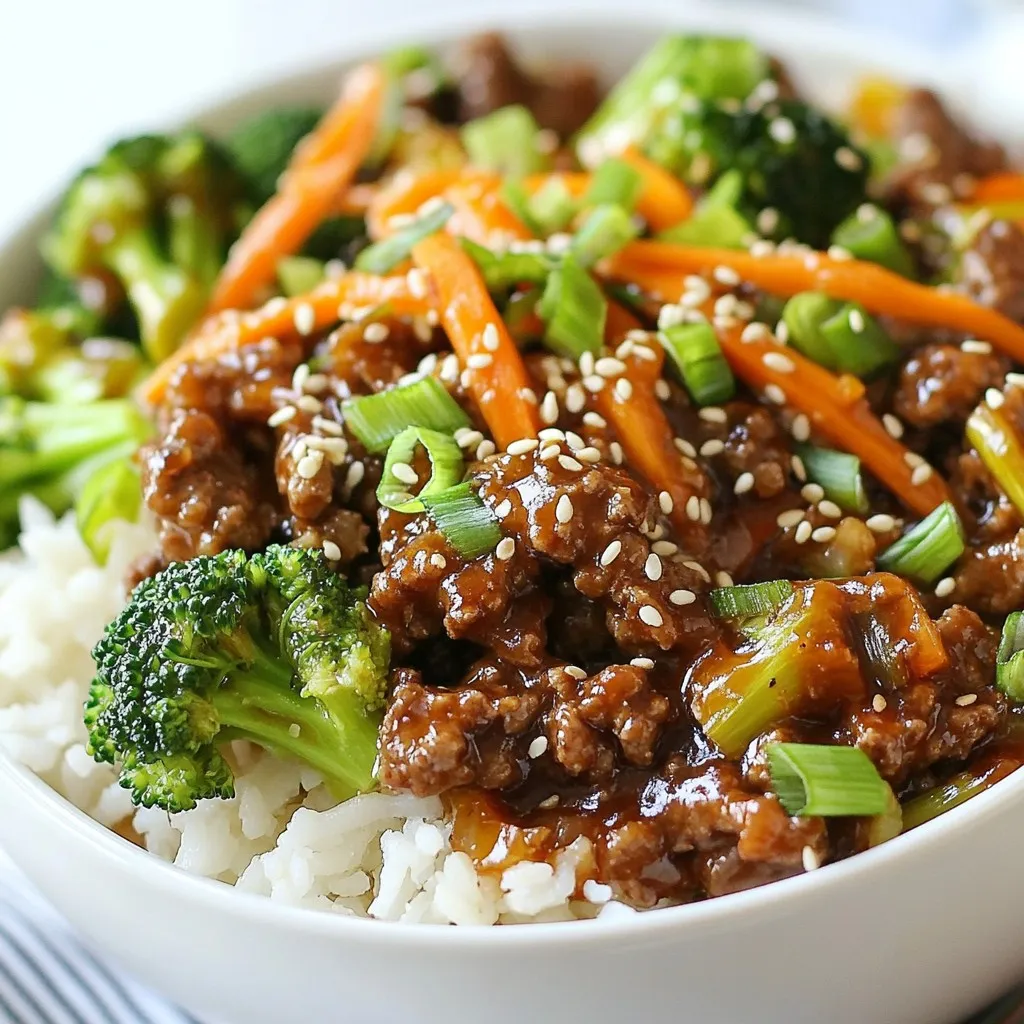
Korean Ground Beef Bowls Flavor-Packed and Easy Recipe

- 1 lb ground beef (preferably lean) - 1 tablespoon sesame oil - 4 cloves garlic, finely minced - 1 tablespoon fresh ginger, finely minced - ¼ cup low-sodium soy sauce - 2 tablespoons brown sugar - 1 tablespoon rice vinegar - 1 tablespoon Gochujang (Korean chili paste) - 2 green onions, thinly sliced (reserve some for garnish) - 1 medium carrot, julienned - 1 cup fresh broccoli florets - 2 cups cooked jasmine rice - 1 tablespoon sesame seeds (for garnish) - Salt and pepper to taste Gather these ingredients before you start. Lean ground beef gives the dish a nice texture. Sesame oil adds a rich, nutty flavor. Fresh garlic and ginger create a fragrant base. Low-sodium soy sauce keeps it savory without too much salt. Brown sugar brings a hint of sweetness. Rice vinegar adds brightness. Gochujang gives a spicy kick. Green onions and carrots add crunch. Broccoli adds color and nutrients. Jasmine rice serves as a fluffy base. Sesame seeds make a lovely garnish. Salt and pepper enhance all the flavors. Each ingredient plays a role in creating balance. You can adjust the spice by adding more or less Gochujang. If you want, you can use different vegetables too! {{ingredient_image_2}} - Heat 1 tablespoon of sesame oil in a large skillet over medium heat. - Add 4 minced garlic cloves and 1 tablespoon of minced ginger. - Sauté the garlic and ginger for about 1 minute until fragrant. - Next, add 1 pound of ground beef to the skillet. - Break the meat apart with a spatula and spread it evenly in the pan. - Cook for 5-7 minutes until the beef is browned and no longer pink. - Once the beef is cooked, add ¼ cup of low-sodium soy sauce. - Mix in 2 tablespoons of brown sugar, 1 tablespoon of rice vinegar, and 1 tablespoon of Gochujang. - Stir everything well and sprinkle in salt and pepper to taste. - Let the mixture simmer for 3-5 minutes to thicken the sauce. - While the beef simmers, steam 1 cup of broccoli florets for 3-4 minutes. - Add 1 julienned medium carrot to the beef mixture and stir for 1-2 minutes. - To assemble the bowls, place cooked jasmine rice at the bottom of each bowl. - Top the rice with the beef mixture, steamed broccoli, and sweet carrots. - Finally, garnish with sliced green onions and sesame seeds for a beautiful finish. How to choose the best ground beef When picking ground beef, lean is best. Look for 80/20 beef, which has 20% fat. This mix gives flavor while keeping it juicy. Avoid meat that looks gray or has a strong smell. Freshness is key for great taste. Tips for balancing flavors with Gochujang Gochujang adds heat and depth to your beef. Start with one tablespoon. Taste your mix before adding more. If it’s too spicy, add a bit of brown sugar or rice vinegar to balance the heat. This will make your dish flavorful without being too hot. Best side dishes to complement Korean Beef Bowls Serve your bowls with pickled vegetables or kimchi for crunch and tang. A simple cucumber salad also works well. For a hearty touch, pair with steamed dumplings. These sides enhance your meal and add variety. Recommended drinks to pair Korean beers or a light lager complement the flavors nicely. If you prefer wine, a chilled Riesling works well too. For a non-alcoholic option, try iced green tea. It refreshes the palate without overpowering the dish. Pro Tips Use High-Quality Beef: Opt for grass-fed or organic ground beef for a richer flavor and better nutritional profile. Customize the Spice Level: Adjust the amount of Gochujang based on your heat preference; start with less if you're sensitive to spice. Prep Ahead: Chop veggies and prepare the sauce in advance to make assembly quicker during busy weeknights. Experiment with Veggies: Feel free to add other vegetables like bell peppers or snap peas for extra color and crunch. {{image_4}} You can easily switch up the protein in this dish. Try ground turkey or chicken. Both will keep the dish lean and tasty. If you want to go meatless, use firm tofu or tempeh. Crumble them like ground beef and cook them the same way. They absorb all the great flavors from the sauce. Adjusting spice levels is simple. If you like more heat, add more Gochujang. For less heat, use less or skip it. You can also add a splash of sriracha for extra zing. Feel free to mix in different veggies too. Bell peppers, snap peas, or zucchini work well. Just remember to chop them small, so they cook fast and mix well. To store your Korean Ground Beef Bowls, let them cool first. Place them in an airtight container. This keeps the flavors fresh. You can store them in the fridge. They will last for about 3 to 4 days. If you want to keep them longer, freeze them. They can stay in the freezer for up to 2 months. Just remember to label the container with the date. This way, you will know when to use them. When you are ready to eat your leftovers, reheating is key. The microwave is quick and easy. Place your bowl in the microwave. Heat it for 1 to 2 minutes. Stir halfway through for even heating. If you prefer, you can use a skillet. Heat it over medium heat. Add a splash of water to keep it moist. Stir for about 5 minutes until warm. Enjoy your meal just like the first time! Can I freeze Korean Ground Beef Bowls? Yes, you can freeze Korean Ground Beef Bowls. Just cool them first. Place the beef mix and rice in airtight containers. They can last up to three months. When ready to eat, thaw in the fridge overnight and reheat on the stove or microwave. What can I use instead of Gochujang? If you don’t have Gochujang, try using sriracha or chili paste. Mix a bit of sugar for sweetness. This keeps the flavor close, but it may not be as rich. How do I make it less spicy? To tone down the heat, reduce the Gochujang amount. You can also add more sugar or rice vinegar. Adding more vegetables like carrots or broccoli helps, too. These will balance the spice and keep the dish tasty. Korean Ground Beef Bowls are a tasty, easy dish to make. We covered the main ingredients, step-by-step cooking, and tips for success. You learned how to adjust flavors and even switch up proteins if needed. Remember, these bowls are not just quick to prepare but also fun to customize. Use fresh, good-quality ingredients for the best results. Enjoy your cooking, and make these bowls your own!

WANT TO SAVE THIS RECIPE?

Looking for a meal that’s quick, easy, and bursting with flavor? My Korean Ground Beef Bowls are just the dish for you! With simple ingredients and step-by-step guidance, you can whip up a tasty dinner that will impress everyone at your table. From the rich taste of beef to the crunch of fresh veggies, this recipe hits all the right notes. Ready to dive in? Let’s get cooking!

Why I Love This Recipe

  1. Quick and Easy: This recipe comes together in just 30 minutes, making it perfect for busy weeknights.
  2. Flavor Packed: The combination of sesame oil, garlic, ginger, and Gochujang creates a deliciously rich flavor profile.
  3. Customizable: You can easily swap out the vegetables based on your preferences or what’s in your fridge.
  4. Healthy and Wholesome: With lean beef and fresh vegetables, this dish is both nutritious and satisfying.

Ingredients

Main Ingredients

– 1 lb ground beef (preferably lean)

– 1 tablespoon sesame oil

– 4 cloves garlic, finely minced

– 1 tablespoon fresh ginger, finely minced

– ¼ cup low-sodium soy sauce

– 2 tablespoons brown sugar

– 1 tablespoon rice vinegar

– 1 tablespoon Gochujang (Korean chili paste)

– 2 green onions, thinly sliced (reserve some for garnish)

– 1 medium carrot, julienned

– 1 cup fresh broccoli florets

– 2 cups cooked jasmine rice

– 1 tablespoon sesame seeds (for garnish)

– Salt and pepper to taste

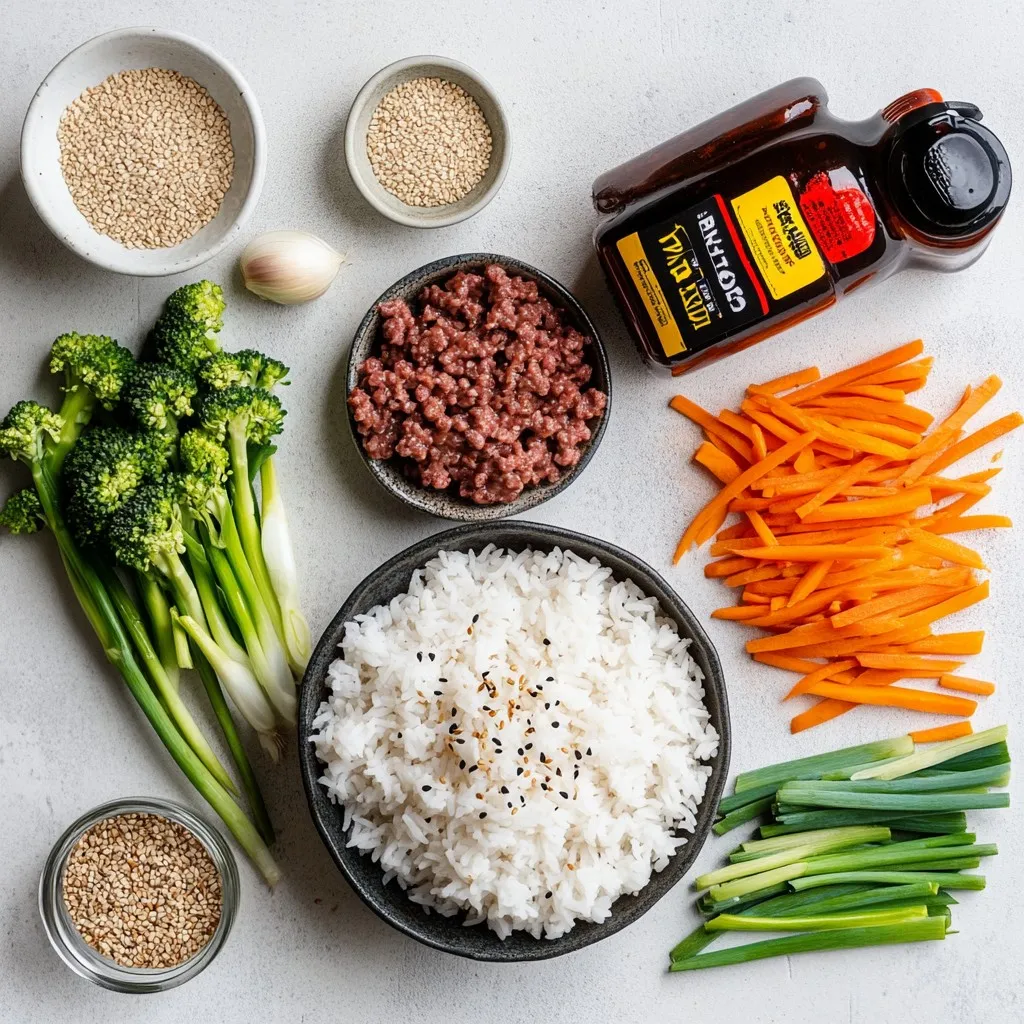
Gather these ingredients before you start. Lean ground beef gives the dish a nice texture. Sesame oil adds a rich, nutty flavor. Fresh garlic and ginger create a fragrant base. Low-sodium soy sauce keeps it savory without too much salt. Brown sugar brings a hint of sweetness. Rice vinegar adds brightness. Gochujang gives a spicy kick. Green onions and carrots add crunch. Broccoli adds color and nutrients. Jasmine rice serves as a fluffy base. Sesame seeds make a lovely garnish. Salt and pepper enhance all the flavors.

Each ingredient plays a role in creating balance. You can adjust the spice by adding more or less Gochujang. If you want, you can use different vegetables too!
Step-by-Step Instructions

Cooking the Base

– Heat 1 tablespoon of sesame oil in a large skillet over medium heat.

– Add 4 minced garlic cloves and 1 tablespoon of minced ginger.

– Sauté the garlic and ginger for about 1 minute until fragrant.

– Next, add 1 pound of ground beef to the skillet.

– Break the meat apart with a spatula and spread it evenly in the pan.

– Cook for 5-7 minutes until the beef is browned and no longer pink.

Creating the Flavor

– Once the beef is cooked, add ¼ cup of low-sodium soy sauce.

– Mix in 2 tablespoons of brown sugar, 1 tablespoon of rice vinegar, and 1 tablespoon of Gochujang.

– Stir everything well and sprinkle in salt and pepper to taste.

– Let the mixture simmer for 3-5 minutes to thicken the sauce.

Final Preparations

– While the beef simmers, steam 1 cup of broccoli florets for 3-4 minutes.

– Add 1 julienned medium carrot to the beef mixture and stir for 1-2 minutes.

– To assemble the bowls, place cooked jasmine rice at the bottom of each bowl.

– Top the rice with the beef mixture, steamed broccoli, and sweet carrots.

– Finally, garnish with sliced green onions and sesame seeds for a beautiful finish.

Tips & Tricks

Perfecting the Dish

How to choose the best ground beef

When picking ground beef, lean is best. Look for 80/20 beef, which has 20% fat. This mix gives flavor while keeping it juicy. Avoid meat that looks gray or has a strong smell. Freshness is key for great taste.

Tips for balancing flavors with Gochujang

Gochujang adds heat and depth to your beef. Start with one tablespoon. Taste your mix before adding more. If it’s too spicy, add a bit of brown sugar or rice vinegar to balance the heat. This will make your dish flavorful without being too hot.

Serving Suggestions

Best side dishes to complement Korean Beef Bowls

Serve your bowls with pickled vegetables or kimchi for crunch and tang. A simple cucumber salad also works well. For a hearty touch, pair with steamed dumplings. These sides enhance your meal and add variety.

Recommended drinks to pair

Korean beers or a light lager complement the flavors nicely. If you prefer wine, a chilled Riesling works well too. For a non-alcoholic option, try iced green tea. It refreshes the palate without overpowering the dish.

Pro Tips

  1. Use High-Quality Beef: Opt for grass-fed or organic ground beef for a richer flavor and better nutritional profile.
  2. Customize the Spice Level: Adjust the amount of Gochujang based on your heat preference; start with less if you’re sensitive to spice.
  3. Prep Ahead: Chop veggies and prepare the sauce in advance to make assembly quicker during busy weeknights.
  4. Experiment with Veggies: Feel free to add other vegetables like bell peppers or snap peas for extra color and crunch.

Variations

Ingredient Substitutions

You can easily switch up the protein in this dish. Try ground turkey or chicken. Both will keep the dish lean and tasty. If you want to go meatless, use firm tofu or tempeh. Crumble them like ground beef and cook them the same way. They absorb all the great flavors from the sauce.

Flavor Variations

Adjusting spice levels is simple. If you like more heat, add more Gochujang. For less heat, use less or skip it. You can also add a splash of sriracha for extra zing. Feel free to mix in different veggies too. Bell peppers, snap peas, or zucchini work well. Just remember to chop them small, so they cook fast and mix well.

Storage Info

Storing Leftovers

To store your Korean Ground Beef Bowls, let them cool first. Place them in an airtight container. This keeps the flavors fresh. You can store them in the fridge. They will last for about 3 to 4 days. If you want to keep them longer, freeze them. They can stay in the freezer for up to 2 months. Just remember to label the container with the date. This way, you will know when to use them.

Reheating Instructions

When you are ready to eat your leftovers, reheating is key. The microwave is quick and easy. Place your bowl in the microwave. Heat it for 1 to 2 minutes. Stir halfway through for even heating. If you prefer, you can use a skillet. Heat it over medium heat. Add a splash of water to keep it moist. Stir for about 5 minutes until warm. Enjoy your meal just like the first time!

FAQs

Common Questions

Can I freeze Korean Ground Beef Bowls?

Yes, you can freeze Korean Ground Beef Bowls. Just cool them first. Place the beef mix and rice in airtight containers. They can last up to three months. When ready to eat, thaw in the fridge overnight and reheat on the stove or microwave.

What can I use instead of Gochujang?

If you don’t have Gochujang, try using sriracha or chili paste. Mix a bit of sugar for sweetness. This keeps the flavor close, but it may not be as rich.

How do I make it less spicy?

To tone down the heat, reduce the Gochujang amount. You can also add more sugar or rice vinegar. Adding more vegetables like carrots or broccoli helps, too. These will balance the spice and keep the dish tasty.

Korean Ground Beef Bowls are a tasty, easy dish to make. We covered the main ingredients, step-by-step cooking, and tips for success. You learned how to adjust flavors and even switch up proteins if needed. Remember, these bowls are not just quick to prepare but also fun to customize. Use fresh, good-quality ingredients for the best results. Enjoy your cooking, and make these bowls your ow


- 1 lb ground beef (preferably lean) - 1 tablespoon sesame oil - 4 cloves garlic, finely minced - 1 tablespoon fresh ginger, finely minced - ¼ cup low-sodium soy sauce - 2 tablespoons brown sugar - 1 tablespoon rice vinegar - 1 tablespoon Gochujang (Korean chili paste) - 2 green onions, thinly sliced (reserve some for garnish) - 1 medium carrot, julienned - 1 cup fresh broccoli florets - 2 cups cooked jasmine rice - 1 tablespoon sesame seeds (for garnish) - Salt and pepper to taste Gather these ingredients before you start. Lean ground beef gives the dish a nice texture. Sesame oil adds a rich, nutty flavor. Fresh garlic and ginger create a fragrant base. Low-sodium soy sauce keeps it savory without too much salt. Brown sugar brings a hint of sweetness. Rice vinegar adds brightness. Gochujang gives a spicy kick. Green onions and carrots add crunch. Broccoli adds color and nutrients. Jasmine rice serves as a fluffy base. Sesame seeds make a lovely garnish. Salt and pepper enhance all the flavors. Each ingredient plays a role in creating balance. You can adjust the spice by adding more or less Gochujang. If you want, you can use different vegetables too! {{ingredient_image_2}} - Heat 1 tablespoon of sesame oil in a large skillet over medium heat. - Add 4 minced garlic cloves and 1 tablespoon of minced ginger. - Sauté the garlic and ginger for about 1 minute until fragrant. - Next, add 1 pound of ground beef to the skillet. - Break the meat apart with a spatula and spread it evenly in the pan. - Cook for 5-7 minutes until the beef is browned and no longer pink. - Once the beef is cooked, add ¼ cup of low-sodium soy sauce. - Mix in 2 tablespoons of brown sugar, 1 tablespoon of rice vinegar, and 1 tablespoon of Gochujang. - Stir everything well and sprinkle in salt and pepper to taste. - Let the mixture simmer for 3-5 minutes to thicken the sauce. - While the beef simmers, steam 1 cup of broccoli florets for 3-4 minutes. - Add 1 julienned medium carrot to the beef mixture and stir for 1-2 minutes. - To assemble the bowls, place cooked jasmine rice at the bottom of each bowl. - Top the rice with the beef mixture, steamed broccoli, and sweet carrots. - Finally, garnish with sliced green onions and sesame seeds for a beautiful finish. How to choose the best ground beef When picking ground beef, lean is best. Look for 80/20 beef, which has 20% fat. This mix gives flavor while keeping it juicy. Avoid meat that looks gray or has a strong smell. Freshness is key for great taste. Tips for balancing flavors with Gochujang Gochujang adds heat and depth to your beef. Start with one tablespoon. Taste your mix before adding more. If it’s too spicy, add a bit of brown sugar or rice vinegar to balance the heat. This will make your dish flavorful without being too hot. Best side dishes to complement Korean Beef Bowls Serve your bowls with pickled vegetables or kimchi for crunch and tang. A simple cucumber salad also works well. For a hearty touch, pair with steamed dumplings. These sides enhance your meal and add variety. Recommended drinks to pair Korean beers or a light lager complement the flavors nicely. If you prefer wine, a chilled Riesling works well too. For a non-alcoholic option, try iced green tea. It refreshes the palate without overpowering the dish. Pro Tips Use High-Quality Beef: Opt for grass-fed or organic ground beef for a richer flavor and better nutritional profile. Customize the Spice Level: Adjust the amount of Gochujang based on your heat preference; start with less if you're sensitive to spice. Prep Ahead: Chop veggies and prepare the sauce in advance to make assembly quicker during busy weeknights. Experiment with Veggies: Feel free to add other vegetables like bell peppers or snap peas for extra color and crunch. {{image_4}} You can easily switch up the protein in this dish. Try ground turkey or chicken. Both will keep the dish lean and tasty. If you want to go meatless, use firm tofu or tempeh. Crumble them like ground beef and cook them the same way. They absorb all the great flavors from the sauce. Adjusting spice levels is simple. If you like more heat, add more Gochujang. For less heat, use less or skip it. You can also add a splash of sriracha for extra zing. Feel free to mix in different veggies too. Bell peppers, snap peas, or zucchini work well. Just remember to chop them small, so they cook fast and mix well. To store your Korean Ground Beef Bowls, let them cool first. Place them in an airtight container. This keeps the flavors fresh. You can store them in the fridge. They will last for about 3 to 4 days. If you want to keep them longer, freeze them. They can stay in the freezer for up to 2 months. Just remember to label the container with the date. This way, you will know when to use them. When you are ready to eat your leftovers, reheating is key. The microwave is quick and easy. Place your bowl in the microwave. Heat it for 1 to 2 minutes. Stir halfway through for even heating. If you prefer, you can use a skillet. Heat it over medium heat. Add a splash of water to keep it moist. Stir for about 5 minutes until warm. Enjoy your meal just like the first time! Can I freeze Korean Ground Beef Bowls? Yes, you can freeze Korean Ground Beef Bowls. Just cool them first. Place the beef mix and rice in airtight containers. They can last up to three months. When ready to eat, thaw in the fridge overnight and reheat on the stove or microwave. What can I use instead of Gochujang? If you don’t have Gochujang, try using sriracha or chili paste. Mix a bit of sugar for sweetness. This keeps the flavor close, but it may not be as rich. How do I make it less spicy? To tone down the heat, reduce the Gochujang amount. You can also add more sugar or rice vinegar. Adding more vegetables like carrots or broccoli helps, too. These will balance the spice and keep the dish tasty. Korean Ground Beef Bowls are a tasty, easy dish to make. We covered the main ingredients, step-by-step cooking, and tips for success. You learned how to adjust flavors and even switch up proteins if needed. Remember, these bowls are not just quick to prepare but also fun to customize. Use fresh, good-quality ingredients for the best results. Enjoy your cooking, and make these bowls your own!

Korean Beef Bliss Bowls

Delicious and flavorful bowls featuring ground beef, fresh vegetables, and jasmine rice.
Prep Time 15 minutes
Cook Time 15 minutes
Total Time 30 minutes
Course Main Course
Cuisine Korean
Servings 4
Calories 500 kcal

Ingredients
  

  • 1 lb ground beef (preferably lean)
  • 1 tablespoon sesame oil
  • 4 cloves garlic, finely minced
  • 1 tablespoon fresh ginger, finely minced
  • 0.25 cup low-sodium soy sauce
  • 2 tablespoons brown sugar
  • 1 tablespoon rice vinegar
  • 1 tablespoon Gochujang (Korean chili paste)
  • 2 green onions thinly sliced (reserve some for garnish)
  • 1 medium carrot, julienned
  • 1 cup fresh broccoli florets
  • 2 cups cooked jasmine rice
  • 1 tablespoon sesame seeds (for garnish)
  • to taste salt and pepper

Instructions
 

  • Begin by heating the sesame oil in a large skillet over medium heat. Once the oil is shimmering, add the minced garlic and ginger. Sauté for about 1 minute or until the mixture becomes fragrant, stirring frequently to prevent burning.
  • Next, add the ground beef to the skillet. Use a spatula to break the meat apart, spreading it evenly across the pan. Cook for approximately 5-7 minutes, or until the beef is thoroughly browned and no longer pink, ensuring to stir occasionally for even cooking.
  • Once the beef is cooked, incorporate the soy sauce, brown sugar, rice vinegar, Gochujang, and a pinch of salt and pepper into the skillet. Stir everything together well, and allow it to simmer for 3-5 minutes. This will help the sauce thicken and coat the beef deliciously.
  • While the beef is simmering, prepare the broccoli by steaming the florets for about 3-4 minutes until they are tender yet vibrant in color. Afterward, add the julienned carrots to the skillet with the beef, stirring them in for 1-2 minutes until they are softened and well mixed.
  • To assemble the bowls, start by placing a generous scoop of warm jasmine rice in the bottom of each bowl. Top the rice with a hearty portion of the Korean beef mixture, followed by the steamed broccoli and sweet carrots for a vibrant presentation.
  • Finally, garnish your bliss bowls with the reserved sliced green onions and a delightful sprinkle of sesame seeds to finish the dish with a touch of elegance.

Notes

Feel free to adjust the spice level by adding more or less Gochujang.
Keyword beef, bowl, easy, korean, rice

WANT TO SAVE THIS RECIPE?

Related Posts