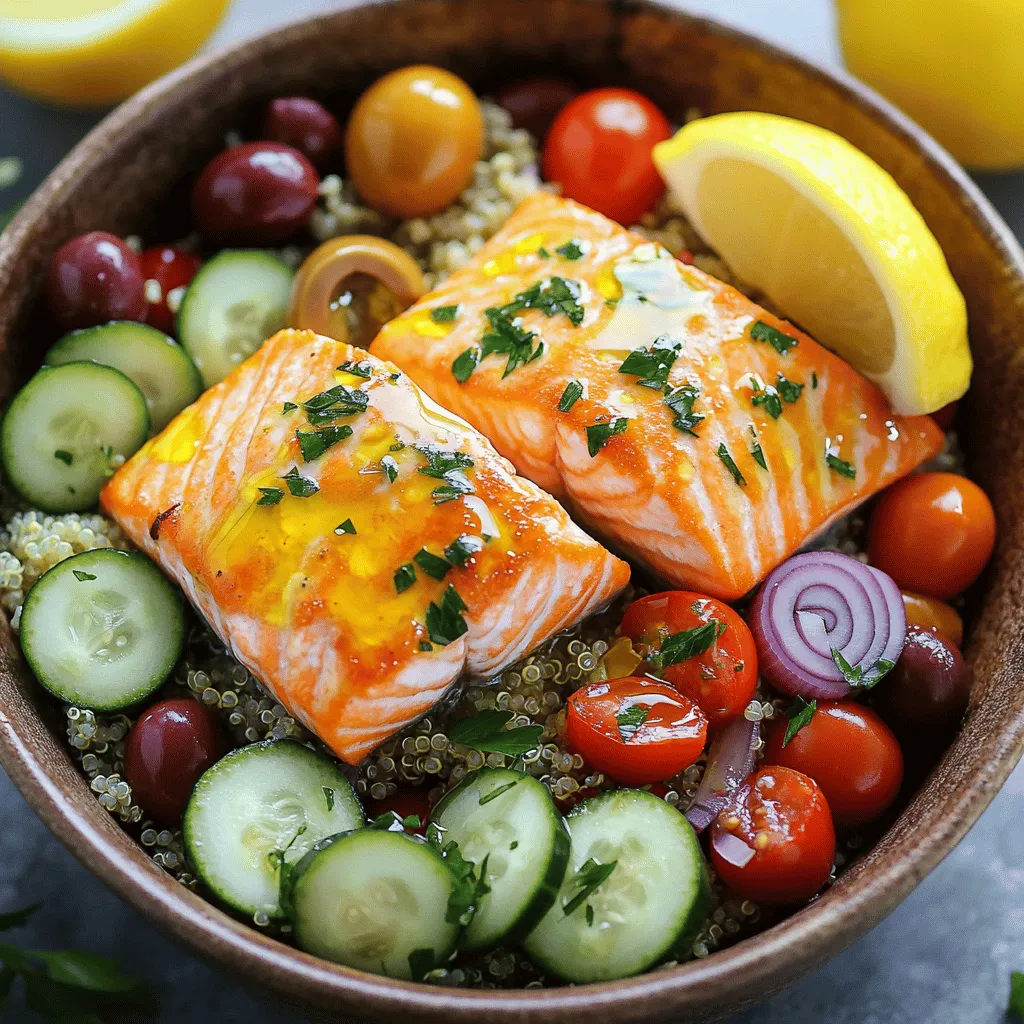
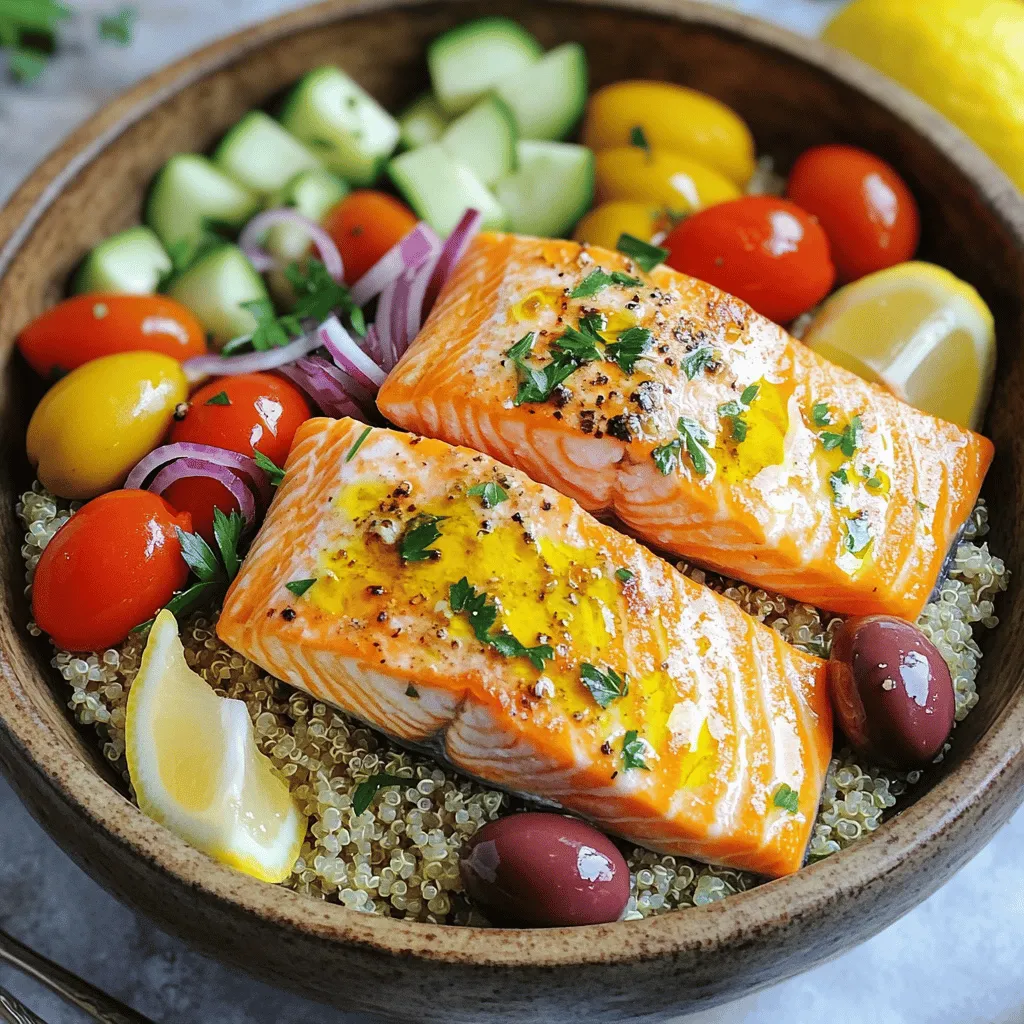
Healthy Mediterranean Salmon Bowl Fresh and Flavorful Meal
![- 2 fresh salmon fillets - 1 cup quinoa, thoroughly rinsed - 2 cups vegetable broth or water - 1 cup cherry tomatoes, halved - 1 crisp cucumber, diced - 1/2 cup Kalamata olives, pitted and sliced - 1/2 red onion, delicately thin-sliced - 1/4 cup fresh parsley, finely chopped - 1 lemon, juiced - Salt and freshly cracked pepper, to taste - 1 teaspoon garlic powder - 1 teaspoon dried oregano - Extra-virgin olive oil - Optional toppings (e.g., feta cheese, avocado, arugula) Gather these fresh ingredients for your Healthy Mediterranean Salmon Bowl. The salmon gives protein and a rich flavor. Quinoa adds a nutty taste and is full of fiber. The vegetables bring color, crunch, and nutrients. You can always switch up the ingredients based on what you like or have on hand. If you want to make it even more gourmet, consider our Full Recipe for detailed steps. Enjoy mixing and matching! To start, combine 1 cup of rinsed quinoa with 2 cups of vegetable broth or water in a medium saucepan. Heat the mixture on medium-high until it boils. Once it bubbles, reduce the heat to low. Cover it and let it simmer for about 15 minutes. You’ll know it’s done when all the liquid is soaked up. After that, take it off the heat and fluff it with a fork. Next, preheat your oven to 400°F (200°C). While it warms, line a baking tray with parchment paper. Place the 2 salmon fillets skin-side down. Drizzle them with olive oil and season with garlic powder, dried oregano, salt, and freshly cracked pepper. Bake the salmon for 12 to 15 minutes. It should be opaque and flake easily when it’s done. While the salmon bakes, it’s time to chop the vegetables. In a large mixing bowl, toss together 1 cup of halved cherry tomatoes, 1 diced cucumber, ½ thinly sliced red onion, and ½ cup of pitted Kalamata olives. Drizzle with 1 tablespoon of olive oil and the juice from 1 lemon. Season with salt and pepper to taste. Mix well to spread the flavors evenly. Now, grab your serving bowls. Start with a generous scoop of fluffy quinoa as the base. Place a roasted salmon fillet right on top of the quinoa. Next, add a hearty portion of the vibrant vegetable mixture on one side of the salmon. Garnish with fresh parsley for a lovely finish. You can find the complete recipe [Full Recipe]. Enjoy a fresh and healthy Mediterranean salmon bowl! To know when salmon is done, check its color. It should turn from bright pink to a lighter pink. The fish should also flake easily when you poke it with a fork. For the best results, I recommend two cooking methods. Grilling gives a nice char and smoky flavor. Poaching keeps the fish moist and tender. Marinate your salmon for extra taste. A simple mix of olive oil, lemon juice, and garlic works well. You can let it sit for 30 minutes. For the veggies, add a splash of balsamic vinegar or a sprinkle of feta cheese. This will really boost their flavors. To save time, prep your ingredients in advance. Cook the quinoa and chop the veggies a day before. Store them in airtight containers in the fridge. This way, assembly is quick and easy. For leftovers, keep them in separate containers. This helps keep the salmon and veggies fresh. {{image_4}} You can change the grains in your bowl. Try using rice or farro instead of quinoa. Each grain adds its own flavor and texture. For the salmon, think about different ways to cook it. You can use smoked salmon for a rich taste or grill it for a nice char. Both options can give your dish a new twist. Adding spices can change your bowl's taste. Try paprika for a smoky flavor or cumin for warmth. You can also switch up the dressing. Balsamic dressing adds sweetness, while tahini brings a nutty taste. These small changes can make a big difference in flavor. If you want a plant-based meal, you can swap salmon with tofu or chickpeas. Tofu absorbs flavors well and gives a nice texture. Chickpeas add protein and fiber. For toppings, consider using avocado for creaminess or nuts for crunch. These alternatives keep your bowl tasty and healthy. For the full recipe, check out the Mediterranean Bliss Salmon Bowl. To keep your Healthy Mediterranean Salmon Bowl fresh, place leftovers in airtight containers. This helps lock in flavors and moisture. I recommend glass containers for better heat retention. Let the bowl cool to room temperature before sealing. Store in the fridge for up to three days. You can freeze both quinoa and salmon. For quinoa, allow it to cool, then spread it in a thin layer on a baking sheet. Freeze until firm, then transfer to a freezer-safe bag. For salmon, wrap each fillet tightly in plastic wrap, then place in a freezer bag. To reheat, thaw overnight in the fridge. Warm quinoa in a microwave or on the stove until hot. Bake the salmon at 350°F (175°C) for about 10 minutes until heated through. For the best taste and safety, eat the salmon within three days if stored in the fridge. Quinoa can last about five days. If frozen, consume salmon within three months for the best quality. Enjoy your meal while it's fresh! You can add many tasty sides to your salmon bowl. Here are some ideas: - A simple green salad with mixed greens and vinaigrette. - Whole-grain pita or flatbread for dipping. - Roasted vegetables like zucchini, bell peppers, or asparagus. - Hummus or tzatziki for extra flavor. - Sliced avocado for creaminess. Yes, you can prep this meal in advance. For best results, cook the quinoa and salmon and store them in separate containers. Keep the vegetables fresh by cutting them just before serving. To store: - Quinoa lasts up to 4 days in the fridge. - Cooked salmon stays fresh for 2-3 days. - Store veggies in an airtight container to keep them crisp. You can easily change the spice level in your bowl. To add heat, sprinkle some red pepper flakes or cayenne pepper on the salmon before baking. For less spice, simply skip these ingredients. You can also serve a spicy sauce on the side for those who want it hot. Yes, this recipe is naturally gluten-free. Quinoa is a great gluten-free grain. Just ensure any additional ingredients, like dressings, are gluten-free too. Check labels on store-bought items to be safe. This dish is packed with nutrients. Salmon provides healthy fats and protein. Quinoa is rich in fiber and contains all nine essential amino acids. The fresh veggies add vitamins and antioxidants. Together, these ingredients support heart health, weight management, and overall wellness. Enjoy a bowl full of healthy goodness! This blog post explored a delicious Mediterranean salmon bowl. We discussed fresh ingredients like salmon, quinoa, and vibrant vegetables. Each step, from cooking the quinoa to baking the salmon, ensures a tasty meal. You can adapt flavors to fit your taste and enjoy meal prep tips for easy assembly. Remember, leftovers can be stored or frozen for future meals. Try this recipe, and you'll have a healthy, flavorful dish that satisfies. Eating well can be simple and enjoyable!](https://fastmealmate.com/wp-content/uploads/2025/06/f0df72fe-6851-4768-81fd-7e53aec44a27.webp)
Dive into a burst of flavors with my Healthy Mediterranean Salmon Bowl! This fresh and vibrant dish combines the rich taste of salmon with wholesome quinoa and crisp veggies. Packed with nutrients, it’s perfect for anyone looking to enjoy a tasty meal that’s also good for you. Whether you’re a busy parent or a health-conscious foodie, this recipe will fit your needs and excite your palate. Let’s get cooking!
Ingredients
Main Ingredients
– 2 fresh salmon fillets
– 1 cup quinoa, thoroughly rinsed
– 2 cups vegetable broth or water
Vegetables and Seasonings
– 1 cup cherry tomatoes, halved
– 1 crisp cucumber, diced
– 1/2 cup Kalamata olives, pitted and sliced
– 1/2 red onion, delicately thin-sliced
– 1/4 cup fresh parsley, finely chopped
– 1 lemon, juiced
– Salt and freshly cracked pepper, to taste
– 1 teaspoon garlic powder
– 1 teaspoon dried oregano
Additional Optional Ingredients
– Extra-virgin olive oil
– Optional toppings (e.g., feta cheese, avocado, arugula)
Gather these fresh ingredients for your Healthy Mediterranean Salmon Bowl. The salmon gives protein and a rich flavor. Quinoa adds a nutty taste and is full of fiber. The vegetables bring color, crunch, and nutrients. You can always switch up the ingredients based on what you like or have on hand.Enjoy mixing and matching!
Step-by-Step Instructions
Preparing the Quinoa
To start, combine 1 cup of rinsed quinoa with 2 cups of vegetable broth or water in a medium saucepan. Heat the mixture on medium-high until it boils. Once it bubbles, reduce the heat to low. Cover it and let it simmer for about 15 minutes. You’ll know it’s done when all the liquid is soaked up. After that, take it off the heat and fluff it with a fork.
Baking the Salmon
Next, preheat your oven to 400°F (200°C). While it warms, line a baking tray with parchment paper. Place the 2 salmon fillets skin-side down. Drizzle them with olive oil and season with garlic powder, dried oregano, salt, and freshly cracked pepper. Bake the salmon for 12 to 15 minutes. It should be opaque and flake easily when it’s done.
Chopping the Vegetables
While the salmon bakes, it’s time to chop the vegetables. In a large mixing bowl, toss together 1 cup of halved cherry tomatoes, 1 diced cucumber, ½ thinly sliced red onion, and ½ cup of pitted Kalamata olives. Drizzle with 1 tablespoon of olive oil and the juice from 1 lemon. Season with salt and pepper to taste. Mix well to spread the flavors evenly.
Assembling the Bowl
Now, grab your serving bowls. Start with a generous scoop of fluffy quinoa as the base. Place a roasted salmon fillet right on top of the quinoa. Next, add a hearty portion of the vibrant vegetable mixture on one side of the salmon.
Garnish with fresh parsley for a lovely finish.Enjoy a fresh and healthy Mediterranean salmon bowl!
Tips & Tricks
Cooking Salmon Perfectly
To know when salmon is done, check its color. It should turn from bright pink to a lighter pink. The fish should also flake easily when you poke it with a fork. For the best results, I recommend two cooking methods. Grilling gives a nice char and smoky flavor. Poaching keeps the fish moist and tender.
Enhancing Flavor
Marinate your salmon for extra taste. A simple mix of olive oil, lemon juice, and garlic works well. You can let it sit for 30 minutes. For the veggies, add a splash of balsamic vinegar or a sprinkle of feta cheese. This will really boost their flavors.
Meal Prep Tips
To save time, prep your ingredients in advance. Cook the quinoa and chop the veggies a day before. Store them in airtight containers in the fridge. This way, assembly is quick and easy. For leftovers, keep them in separate containers. This helps keep the salmon and veggies fresh.
Variations
Ingredient Swaps
You can change the grains in your bowl. Try using rice or farro instead of quinoa. Each grain adds its own flavor and texture. For the salmon, think about different ways to cook it. You can use smoked salmon for a rich taste or grill it for a nice char. Both options can give your dish a new twist.
Flavor Profile Adjustments
Adding spices can change your bowl’s taste. Try paprika for a smoky flavor or cumin for warmth. You can also switch up the dressing. Balsamic dressing adds sweetness, while tahini brings a nutty taste. These small changes can make a big difference in flavor.
Vegetarian/Vegan Options
If you want a plant-based meal, you can swap salmon with tofu or chickpeas. Tofu absorbs flavors well and gives a nice texture. Chickpeas add protein and fiber. For toppings, consider using avocado for creaminess or nuts for crunch. These alternatives keep your bowl tasty and healthy.
Storage Info
Storing Leftovers
To keep your Healthy Mediterranean Salmon Bowl fresh, place leftovers in airtight containers. This helps lock in flavors and moisture. I recommend glass containers for better heat retention. Let the bowl cool to room temperature before sealing. Store in the fridge for up to three days.
Freezing Instructions
You can freeze both quinoa and salmon. For quinoa, allow it to cool, then spread it in a thin layer on a baking sheet. Freeze until firm, then transfer to a freezer-safe bag. For salmon, wrap each fillet tightly in plastic wrap, then place in a freezer bag. To reheat, thaw overnight in the fridge. Warm quinoa in a microwave or on the stove until hot. Bake the salmon at 350°F (175°C) for about 10 minutes until heated through.
Shelf Life
For the best taste and safety, eat the salmon within three days if stored in the fridge. Quinoa can last about five days. If frozen, consume salmon within three months for the best quality. Enjoy your meal while it’s fresh!
FAQs
What can I serve with a Healthy Mediterranean Salmon Bowl?
You can add many tasty sides to your salmon bowl. Here are some ideas:
– A simple green salad with mixed greens and vinaigrette.
– Whole-grain pita or flatbread for dipping.
– Roasted vegetables like zucchini, bell peppers, or asparagus.
– Hummus or tzatziki for extra flavor.
– Sliced avocado for creaminess.
Can I make this recipe ahead of time?
Yes, you can prep this meal in advance. For best results, cook the quinoa and salmon and store them in separate containers. Keep the vegetables fresh by cutting them just before serving. To store:
– Quinoa lasts up to 4 days in the fridge.
– Cooked salmon stays fresh for 2-3 days.
– Store veggies in an airtight container to keep them crisp.
How can I adjust the spice level?
You can easily change the spice level in your bowl. To add heat, sprinkle some red pepper flakes or cayenne pepper on the salmon before baking. For less spice, simply skip these ingredients. You can also serve a spicy sauce on the side for those who want it hot.
Is this recipe gluten-free?
Yes, this recipe is naturally gluten-free. Quinoa is a great gluten-free grain. Just ensure any additional ingredients, like dressings, are gluten-free too. Check labels on store-bought items to be safe.
What are the nutritional benefits of this dish?
This dish is packed with nutrients. Salmon provides healthy fats and protein. Quinoa is rich in fiber and contains all nine essential amino acids. The fresh veggies add vitamins and antioxidants. Together, these ingredients support heart health, weight management, and overall wellness. Enjoy a bowl full of healthy goodness!
This blog post explored a delicious Mediterranean salmon bowl. We discussed fresh ingredients like salmon, quinoa, and vibrant vegetables. Each step, from cooking the quinoa to baking the salmon, ensures a tasty meal. You can adapt flavors to fit your taste and enjoy meal prep tips for easy assembly. Remember, leftovers can be stored or frozen for future meals. Try this recipe, and you’ll have a healthy, flavorful dish that satisfies. Eating well can be simple and enjoyable!
![- 2 fresh salmon fillets - 1 cup quinoa, thoroughly rinsed - 2 cups vegetable broth or water - 1 cup cherry tomatoes, halved - 1 crisp cucumber, diced - 1/2 cup Kalamata olives, pitted and sliced - 1/2 red onion, delicately thin-sliced - 1/4 cup fresh parsley, finely chopped - 1 lemon, juiced - Salt and freshly cracked pepper, to taste - 1 teaspoon garlic powder - 1 teaspoon dried oregano - Extra-virgin olive oil - Optional toppings (e.g., feta cheese, avocado, arugula) Gather these fresh ingredients for your Healthy Mediterranean Salmon Bowl. The salmon gives protein and a rich flavor. Quinoa adds a nutty taste and is full of fiber. The vegetables bring color, crunch, and nutrients. You can always switch up the ingredients based on what you like or have on hand. If you want to make it even more gourmet, consider our Full Recipe for detailed steps. Enjoy mixing and matching! To start, combine 1 cup of rinsed quinoa with 2 cups of vegetable broth or water in a medium saucepan. Heat the mixture on medium-high until it boils. Once it bubbles, reduce the heat to low. Cover it and let it simmer for about 15 minutes. You’ll know it’s done when all the liquid is soaked up. After that, take it off the heat and fluff it with a fork. Next, preheat your oven to 400°F (200°C). While it warms, line a baking tray with parchment paper. Place the 2 salmon fillets skin-side down. Drizzle them with olive oil and season with garlic powder, dried oregano, salt, and freshly cracked pepper. Bake the salmon for 12 to 15 minutes. It should be opaque and flake easily when it’s done. While the salmon bakes, it’s time to chop the vegetables. In a large mixing bowl, toss together 1 cup of halved cherry tomatoes, 1 diced cucumber, ½ thinly sliced red onion, and ½ cup of pitted Kalamata olives. Drizzle with 1 tablespoon of olive oil and the juice from 1 lemon. Season with salt and pepper to taste. Mix well to spread the flavors evenly. Now, grab your serving bowls. Start with a generous scoop of fluffy quinoa as the base. Place a roasted salmon fillet right on top of the quinoa. Next, add a hearty portion of the vibrant vegetable mixture on one side of the salmon. Garnish with fresh parsley for a lovely finish. You can find the complete recipe [Full Recipe]. Enjoy a fresh and healthy Mediterranean salmon bowl! To know when salmon is done, check its color. It should turn from bright pink to a lighter pink. The fish should also flake easily when you poke it with a fork. For the best results, I recommend two cooking methods. Grilling gives a nice char and smoky flavor. Poaching keeps the fish moist and tender. Marinate your salmon for extra taste. A simple mix of olive oil, lemon juice, and garlic works well. You can let it sit for 30 minutes. For the veggies, add a splash of balsamic vinegar or a sprinkle of feta cheese. This will really boost their flavors. To save time, prep your ingredients in advance. Cook the quinoa and chop the veggies a day before. Store them in airtight containers in the fridge. This way, assembly is quick and easy. For leftovers, keep them in separate containers. This helps keep the salmon and veggies fresh. {{image_4}} You can change the grains in your bowl. Try using rice or farro instead of quinoa. Each grain adds its own flavor and texture. For the salmon, think about different ways to cook it. You can use smoked salmon for a rich taste or grill it for a nice char. Both options can give your dish a new twist. Adding spices can change your bowl's taste. Try paprika for a smoky flavor or cumin for warmth. You can also switch up the dressing. Balsamic dressing adds sweetness, while tahini brings a nutty taste. These small changes can make a big difference in flavor. If you want a plant-based meal, you can swap salmon with tofu or chickpeas. Tofu absorbs flavors well and gives a nice texture. Chickpeas add protein and fiber. For toppings, consider using avocado for creaminess or nuts for crunch. These alternatives keep your bowl tasty and healthy. For the full recipe, check out the Mediterranean Bliss Salmon Bowl. To keep your Healthy Mediterranean Salmon Bowl fresh, place leftovers in airtight containers. This helps lock in flavors and moisture. I recommend glass containers for better heat retention. Let the bowl cool to room temperature before sealing. Store in the fridge for up to three days. You can freeze both quinoa and salmon. For quinoa, allow it to cool, then spread it in a thin layer on a baking sheet. Freeze until firm, then transfer to a freezer-safe bag. For salmon, wrap each fillet tightly in plastic wrap, then place in a freezer bag. To reheat, thaw overnight in the fridge. Warm quinoa in a microwave or on the stove until hot. Bake the salmon at 350°F (175°C) for about 10 minutes until heated through. For the best taste and safety, eat the salmon within three days if stored in the fridge. Quinoa can last about five days. If frozen, consume salmon within three months for the best quality. Enjoy your meal while it's fresh! You can add many tasty sides to your salmon bowl. Here are some ideas: - A simple green salad with mixed greens and vinaigrette. - Whole-grain pita or flatbread for dipping. - Roasted vegetables like zucchini, bell peppers, or asparagus. - Hummus or tzatziki for extra flavor. - Sliced avocado for creaminess. Yes, you can prep this meal in advance. For best results, cook the quinoa and salmon and store them in separate containers. Keep the vegetables fresh by cutting them just before serving. To store: - Quinoa lasts up to 4 days in the fridge. - Cooked salmon stays fresh for 2-3 days. - Store veggies in an airtight container to keep them crisp. You can easily change the spice level in your bowl. To add heat, sprinkle some red pepper flakes or cayenne pepper on the salmon before baking. For less spice, simply skip these ingredients. You can also serve a spicy sauce on the side for those who want it hot. Yes, this recipe is naturally gluten-free. Quinoa is a great gluten-free grain. Just ensure any additional ingredients, like dressings, are gluten-free too. Check labels on store-bought items to be safe. This dish is packed with nutrients. Salmon provides healthy fats and protein. Quinoa is rich in fiber and contains all nine essential amino acids. The fresh veggies add vitamins and antioxidants. Together, these ingredients support heart health, weight management, and overall wellness. Enjoy a bowl full of healthy goodness! This blog post explored a delicious Mediterranean salmon bowl. We discussed fresh ingredients like salmon, quinoa, and vibrant vegetables. Each step, from cooking the quinoa to baking the salmon, ensures a tasty meal. You can adapt flavors to fit your taste and enjoy meal prep tips for easy assembly. Remember, leftovers can be stored or frozen for future meals. Try this recipe, and you'll have a healthy, flavorful dish that satisfies. Eating well can be simple and enjoyable!](https://fastmealmate.com/wp-content/uploads/2025/06/f0df72fe-6851-4768-81fd-7e53aec44a27-300x300.webp)


. Enjoy your cooking! To boost flavor, use fresh herbs. Fresh basil adds a bright note. You can also try parsley or thyme. Adding lemon zest brings a nice zing. For a kick, sprinkle in some red pepper flakes. If you want more depth, use vegetable broth instead of water. You can even roast the zucchini and corn first to enhance their sweetness. One common mistake is overcooking the orzo. Keep a close eye on it as it simmers. If you let it cook too long, it can become mushy. Another mistake is not seasoning enough. Taste and adjust with salt and pepper during cooking. Lastly, don’t skip the resting time after cooking. This helps the flavors blend better. To serve, use a large bowl for a family-style look. Spoon the orzo into the center, leaving some space around it. Top with fresh basil leaves for color. You can also add a sprinkle of cheese for richness. Serve with a lemon wedge on the side. This adds a pop of color and lets guests brighten their dish as they like. For the full recipe, be sure to check out the detailed cooking steps. {{image_4}} This dish shines as a vegetarian option. It uses fresh veggies and orzo, making it filling. To make it vegan, simply ensure your vegetable broth is plant-based. You can also add more protein by including chickpeas or tofu. These additions will keep the dish hearty and satisfying. If you need a gluten-free version, swap the orzo for gluten-free pasta. There are many types available, like rice or quinoa pasta. Just check the cooking time, as it may vary from regular orzo. This way, you can enjoy the flavors without worrying about gluten. Feel free to get creative with seasonal veggies! Try adding diced tomatoes, spinach, or bell peppers. You could also include peas or carrots for extra color and nutrition. Just remember to adjust the cooking time, so everything remains tender and vibrant. These changes can make the dish fun and new each time you prepare it. For the complete recipe, check the Full Recipe section. To keep your One Pan Summer Corn Zucchini Orzo fresh, let it cool first. Transfer the dish into an airtight container. Store it in the fridge for up to three days. This helps maintain its flavors and textures. When you are ready to enjoy leftovers, you can reheat them easily. Place the orzo in a skillet over low heat. Add a splash of vegetable broth or water to prevent sticking. Stir occasionally until it is heated through. This should take about 5 to 7 minutes. You can also use a microwave. Heat for one minute, then stir and check if it's warm. Repeat until heated. If you want to save your dish for later, freezing is a great option. Allow the orzo to cool completely. Portion it into freezer-safe bags or containers. Make sure to remove as much air as possible. Label the bags with the date. You can freeze it for up to three months. For best results, thaw it overnight in the fridge before reheating. For the full recipe, check out the detailed instructions above. To cook orzo perfectly, start with plenty of water. Use a ratio of 1 cup of orzo to 2 cups of water or broth. Bring the liquid to a boil, then add the orzo. Stir it gently to prevent sticking. Cook for about 8 to 10 minutes. Taste it a minute or two before the time is up. You want it al dente, firm but not hard. If there’s excess liquid, drain it off. This method keeps your orzo from getting mushy. Yes, you can use frozen vegetables in this dish. They save time and are often just as healthy. For the One Pan Summer Corn Zucchini Orzo, frozen corn works great. Just add it directly to the skillet. You may need to cook it a bit longer. Frozen zucchini can also work, but fresh zucchini gives a nicer texture. If using frozen, make sure to thaw it first if you want even cooking. Many sides go well with this dish. Here are some ideas: - Grilled Chicken: Adds protein and a nice char. - Garlic Bread: Perfect for soaking up extra broth. - Simple Salad: A light salad with lemon dressing complements the dish. - Roasted Vegetables: A mix of seasonal veggies enhances the meal. These sides make your meal more complete and satisfying. For the full recipe, check out the details above! You learned about the key ingredients and how to cook them. I covered steps, tips, and tricks for a great dish. You also found ways to adapt the recipe for special diets. Storing and reheating leftovers will help cut waste. Always aim for flavor and avoid common mistakes. With these insights, you'll create a tasty one-pan summer corn zucchini orzo. Enjoy your cooking journey and impress your guests!](https://fastmealmate.com/wp-content/uploads/2025/07/e3382d29-f029-483c-a1d1-82293022c013-768x768.webp)
![- 4 cups of juicy watermelon (cut into cubes) - 2 cups of crisp cucumber (diced) - 1 cup of creamy feta cheese (crumbled) - 1/4 cup of fresh mint leaves (finely chopped) - 2 tablespoons of high-quality olive oil - 1 tablespoon of balsamic reduction (optional) - Sea salt to taste - Freshly cracked black pepper to taste - Juice from one fresh lemon The ingredients for this salad create a refreshing blend. The watermelon brings sweetness, while the cucumber adds crunch. Feta cheese gives a creamy touch, making the dish rich and satisfying. Fresh mint adds a burst of flavor that brightens every bite. Using high-quality olive oil enhances the taste, while balsamic reduction adds a sweet twist. You can adjust salt and pepper to fit your taste. The lemon juice lifts the flavors, making everything pop. This salad is perfect for hot days. It’s simple to make and looks great on any table. Plus, it’s a great way to enjoy fresh, seasonal produce. For the full recipe, check out the detailed steps later in this article. To cube watermelon, start with a big, ripe piece. Cut off both ends to make it stable. Stand it up, then slice down the sides to remove the skin. Now, cut the flesh into thick slabs. After that, slice the slabs into cubes. Aim for bite-sized pieces so they are easy to eat. For the cucumber, wash it well. Cut off the ends, then slice it in half lengthwise. Use a spoon to scrape out the seeds if you want a less watery salad. Next, chop it into small, even pieces. This helps the cucumber mix well with other ingredients. When it comes to crumbling feta cheese, first take it out of its packaging. Use your hands or a fork to break it into small pieces. Try to keep the crumbles big enough to stay distinct in the salad. This way, you get that lovely creamy bite. In a large bowl, start by adding the cubed watermelon and diced cucumber. Gently mix them together, ensuring they are evenly combined. Next, sprinkle the crumbled feta cheese over the top. This will add a creamy texture and a salty kick. Add the finely chopped mint leaves next. This herb brightens the salad with its fresh flavor. Now, drizzle the olive oil and squeeze the fresh lemon juice over the salad. This will give it a bright, zesty taste. Using a large spoon, carefully toss the salad. Do this gently to keep the feta from mashing. You want to mix the flavors without losing the feta's shape. Now it's time to season the salad. Add sea salt and freshly cracked black pepper to taste. Start with a little, then adjust as needed. The salt will help enhance all the flavors. Let the salad rest for about 10 minutes before serving. This step is key. It allows the flavors to meld together. The watermelon will release some juice, creating a light dressing. For the complete recipe, check the [Full Recipe]. To create the best flavor in your salad, balance sweetness and acidity. Watermelon is sweet, so you need acidity to cut through that. Fresh lemon juice adds bright notes. You can also try balsamic reduction for a sweet twist. Adjust seasonings to your taste. Add sea salt and black pepper slowly. Taste as you go. This way, the salad fits your personal preference. Presentation matters when serving this salad. For a colorful display, choose a large bowl. Layer the watermelon, cucumber, and feta beautifully. You can also arrange the watermelon cubes in a fun pattern. Lastly, garnish with extra mint leaves. This adds a pop of green and a fresh smell. Having the right tools makes preparation easy. A sharp chef's knife is key for cutting watermelon and cucumber. Use a sturdy mixing bowl to combine all ingredients gently. These tools ensure you maintain the salad's texture and create a lovely dish. For the best results, make sure your tools are clean and ready to go. For a complete guide, check the Full Recipe. {{image_4}} You can swap feta cheese for a vegan option like tofu or almond cheese. These substitutes provide a similar creamy texture. If you want to add more flavor, try using a vegan feta made from cashews. For fruits or vegetables, consider adding berries, mango, or radishes. These additions add color and a unique taste to your salad. Watermelon pairs well with many fruits, so feel free to get creative! Different dressings can enhance your salad. A simple lemon vinaigrette works great. Mix olive oil, lemon juice, salt, and pepper for a fresh taste. You can also make your own balsamic reduction at home. Just simmer balsamic vinegar on low heat until it thickens. This sweet and tangy sauce pairs well with the salad, adding depth to the flavors. Changing the salad with the seasons can keep it fresh. In summer, add fresh basil or strawberries for a sweet twist. In fall, try diced apples or pears for a crunchy bite. For winter, include pomegranate seeds or citrus fruits. These ingredients add a pop of color and flavor to your dish. Always look for seasonal produce to keep your salad exciting and vibrant! To keep your leftover salad fresh, place it in an airtight container. This helps prevent moisture loss and keeps flavors strong. You can use glass or plastic containers. Glass is great for easy cleaning and doesn’t absorb odors. If you want to keep it extra fresh, add a layer of plastic wrap on top before sealing. You can freeze Watermelon Cucumber Feta Salad, but it’s not ideal. Freezing can change the texture of watermelon and cucumber. If you choose to freeze, prepare it without the feta and dressing. Store the fruit and cucumber in a freezer-safe bag. When you're ready to eat, thaw it in the fridge overnight. Add feta and dressing just before serving. In the fridge, this salad lasts about 2 to 3 days. After that, it may start to lose its crispness. Look for signs of spoilage, like a mushy texture or off smell. If the feta starts to look slimy, it’s time to toss it. Always trust your senses when deciding if food is still good to eat. To make this salad heartier, add protein or grains. You can include: - Grilled chicken breast, sliced thin - Cooked quinoa for a nutty flavor - Chickpeas for a plant-based option - Shrimp for a light seafood touch These ingredients mix well with the fresh flavors and keep your salad satisfying. Yes, you can prep ingredients ahead. To keep the salad fresh: - Chop watermelon and cucumber a few hours before serving. - Store the feta separately to avoid sogginess. - Mix everything together just before serving. This way, you enjoy that crisp texture and vibrant taste. Watermelon is hydrating and low in calories. It has vitamins A and C, which support your skin and immune system. Cucumber is also hydrating and offers fiber, which is good for digestion. This salad fits into a healthy diet by providing essential nutrients with low calories. Yes, this salad is gluten-free. All the ingredients, including watermelon, cucumber, and feta, do not contain gluten. For extra options: - Serve it with gluten-free crackers. - Pair it with gluten-free bread for a light meal. Feel free to enjoy this salad without worries about gluten! The Watermelon Cucumber Feta Salad is a refreshingly light dish. You learned about its main ingredients, step-by-step preparation, and unique variations. Remember to balance flavors and let it rest before serving. With tips for storage and healthy options, you can enjoy this salad any time. This recipe is simple, delicious, and perfect for warm days. Now, you have the tools to create a great salad that impresses everyone. Enjoy making it your own!](https://fastmealmate.com/wp-content/uploads/2025/07/b20d6dc1-e7c2-400f-acd5-da5290acfeaa-768x768.webp)