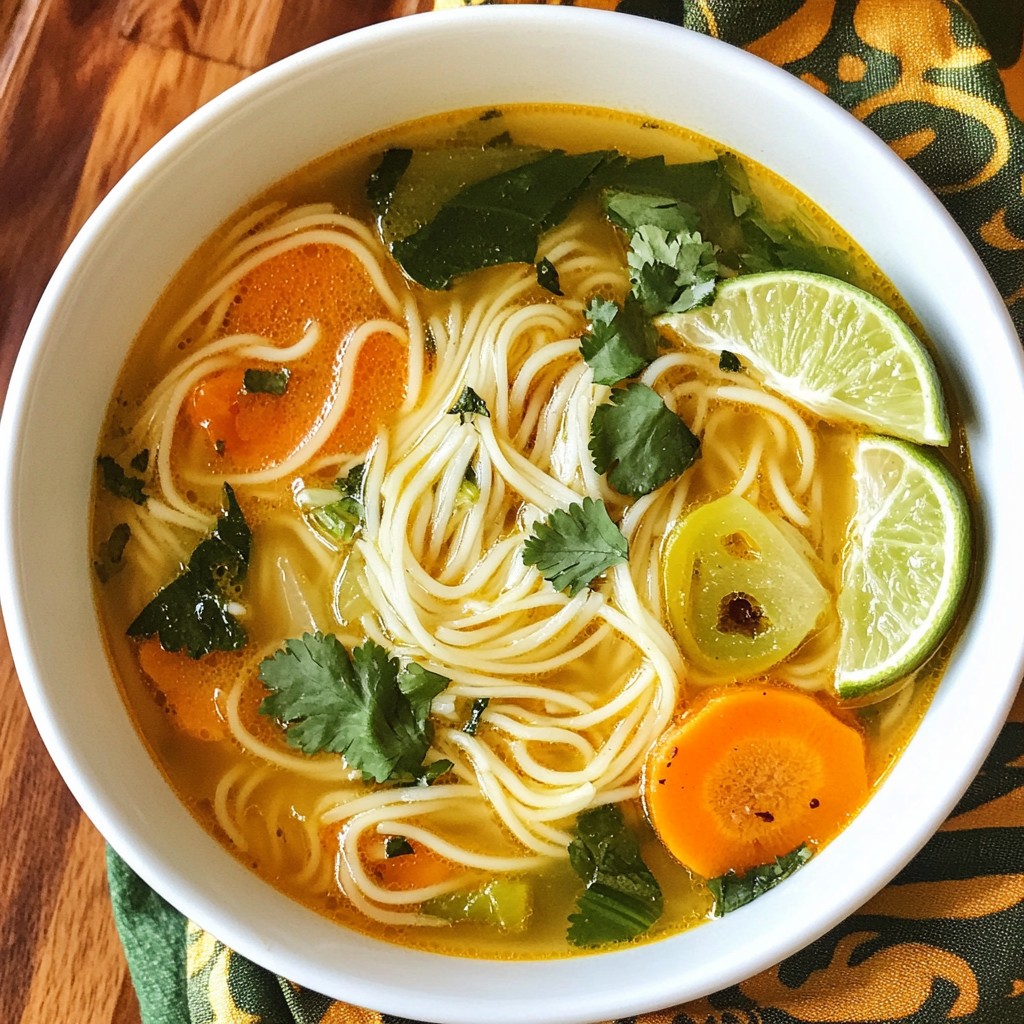
Feeling under the weather or just need a comforting bowl of warmth? My Healing Ginger Garlic Rice Noodle Broth is here to save the day! Packed with nutritious ingredients, this recipe delivers both flavor and health benefits. In this guide, I’ll reveal my secret steps to crafting the perfect broth, offer tips to enhance the flavor, and explore tasty variations. Let’s dive into a warm bowl of goodness together!
Why I Love This Recipe
- Comforting Warmth: This broth is a perfect remedy for chilly days, providing warmth and comfort with every slurp.
- Health Benefits: With ginger and garlic as key ingredients, this recipe is packed with anti-inflammatory properties and immune-boosting benefits.
- Customizable: You can easily adjust the vegetables and spices to your liking, making it a versatile dish for any palate.
- Quick and Easy: This recipe comes together in just 30 minutes, making it a great option for busy weeknights.
Ingredients
Complete Ingredient List
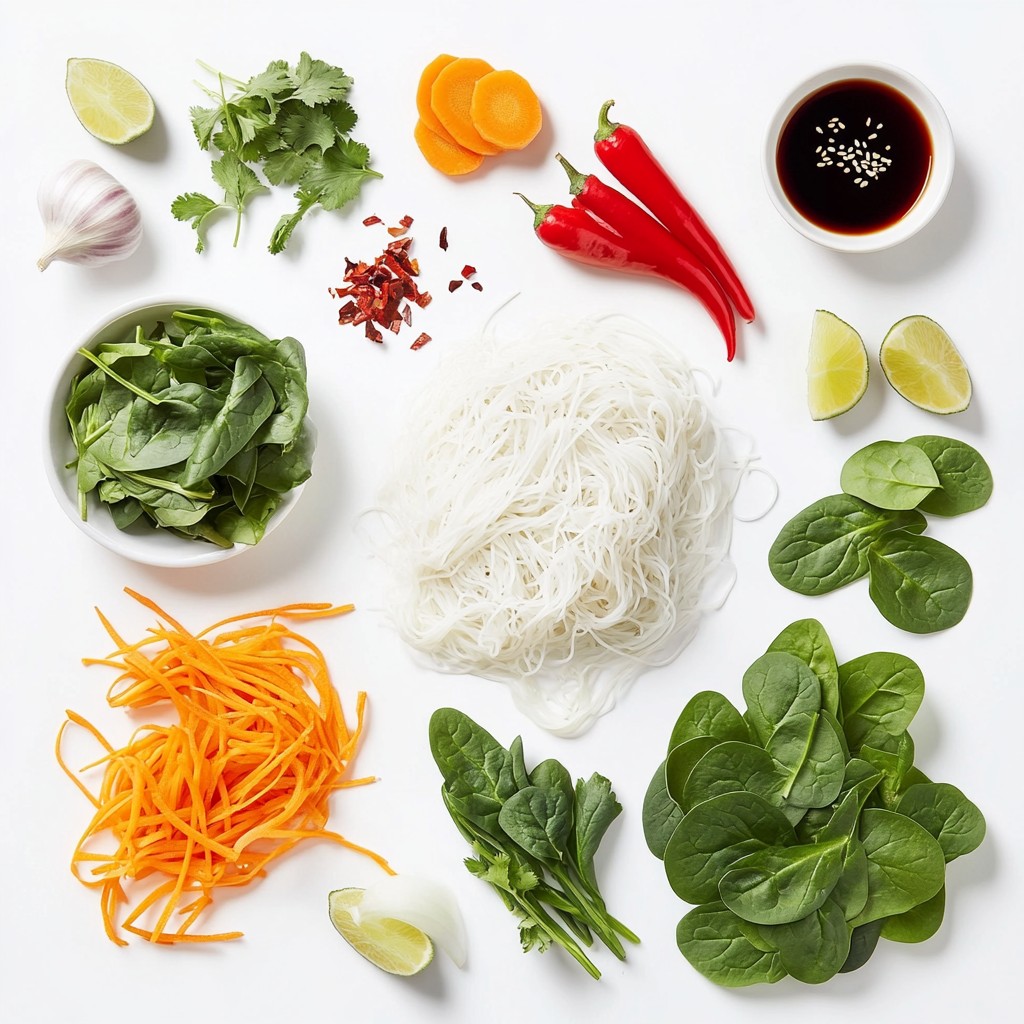
To make Healing Ginger Garlic Rice Noodle Broth, gather these ingredients:
- 200g rice noodles
- 1 tablespoon vegetable oil
- 5 cloves garlic, minced
- 2 inches fresh ginger, grated
- 1 medium onion, thinly sliced
- 4 cups vegetable or chicken broth
- 2 cups water
- 2 medium carrots, thinly sliced
- 1 bell pepper, sliced (color of your choice)
- 1 cup baby spinach (or other leafy greens)
- 2 tablespoons soy sauce (adjust for spice)
- 1 tablespoon sesame oil
- Fresh cilantro, for garnish
- Lime wedges, for serving
- Optional toppings: sliced green onions and a sprinkle of chili flakes for an extra spice kick
Ingredient Substitutions
- If you don’t have rice noodles, try using soba or udon noodles instead.
- Olive oil can replace vegetable oil if needed.
- For a milder taste, substitute garlic with shallots.
- Use fresh herbs like basil or mint instead of cilantro for a different flavor.
- You can swap spinach for kale or other leafy greens.
Nutritional Benefits of Each Ingredient
- Rice noodles: Gluten-free and easy to digest.
- Garlic: Boosts immunity and has anti-inflammatory properties.
- Ginger: Aids digestion and reduces nausea.
- Onion: Provides antioxidants and supports heart health.
- Broth: Hydrating and nourishing, especially when made from bones.
- Carrots: Rich in beta-carotene, good for vision and skin.
- Bell pepper: High in vitamin C, which helps with immune function.
- Spinach: Packed with iron and vitamins A, C, and K.
- Soy sauce: Adds umami flavor and contains protein.
- Sesame oil: Contains healthy fats and adds a nutty taste.
- Cilantro: Rich in antioxidants and may help with detoxification.
- Lime: Provides vitamin C and adds brightness to the dish.
Step-by-Step Instructions
Preparing the Rice Noodles
Start by cooking the rice noodles. Follow the directions on the package. Once done, drain them well. Rinse the noodles under cold water. This step keeps them from sticking together. Set the cooked noodles aside for later use.
Sautéing Garlic and Ginger
Next, take a large pot and heat the vegetable oil. Use medium heat for best results. When the oil is hot, add the minced garlic and grated ginger. Sauté these for 1-2 minutes. You want them fragrant and slightly golden. Then, add the thinly sliced onion. Continue to sauté for about 4-5 minutes. The onion should become soft and see-through.
Simmering the Broth
Now, pour in the vegetable or chicken broth and the water. Bring this mixture to a gentle boil. Then, stir in the sliced carrots and bell pepper. Let them simmer for about 5 minutes. This helps them soften while keeping a bit of crunch. After that, gently fold in the cooked rice noodles. Add the soy sauce and sesame oil next. Stir everything carefully. Let the broth simmer for another 2-3 minutes. This ensures all the flavors blend well. Right before serving, add the baby spinach. Stir it in just until it wilts. This adds a fresh touch to the broth. Taste and adjust the seasoning as needed. Finally, ladle the hot broth into bowls. Garnish each serving with fresh cilantro. Serve with lime wedges for extra zest. Enjoy!
Tips & Tricks
How to Enhance Flavor Further
To make your broth even tastier, add more garlic or ginger. You can also try different herbs like basil or mint. A splash of lime juice brightens the flavors too. Experiment with chili flakes for heat or a sprinkle of sesame seeds for crunch. Each twist creates a new layer of taste.
Avoiding Common Mistakes
One common mistake is overcooking the vegetables. Keep them slightly crunchy for the best texture. Also, don't skip rinsing the rice noodles. This step stops them from sticking together. Finally, taste often as you cook. Adjust the soy sauce and salt to match your preference.
Perfecting the Broth's Texture
The broth should be light but full of flavor. For a richer texture, simmer it longer. This allows the flavors to meld well. You can also blend a portion of the broth to create a smoother base. Just remember to mix it back in for a nice balance.
Pro Tips
- Use Fresh Ingredients: Opt for fresh ginger and garlic to enhance the flavor and health benefits of your broth. Fresh ingredients provide more vibrant flavors and nutrients compared to their dried counterparts.
Variations
Vegetarian vs. Chicken Broth
You can choose between vegetarian and chicken broth for this recipe. If you want a plant-based version, use vegetable broth. It adds rich flavor and is perfect for a light meal. Chicken broth gives a deeper taste and pairs well with the garlic and ginger. Both options are good; it just depends on your preference.
Adding Protein Options
Want to add protein? You have many choices! You can toss in cooked chicken or tofu for a filling dish. For seafood fans, shrimp works wonderfully too. Add it toward the end of cooking to keep it tender. You can also try beans or lentils for a hearty, plant-based boost.
Spicy Add-Ons to Consider
If you like heat, consider adding chili flakes or fresh jalapeños. These spicy add-ons enhance the broth's warmth and flavor. You can also add a splash of hot sauce for an extra kick. Taste your broth before serving. Adjust the spice level to fit your taste. Enjoy experimenting with these variations!
Storage Info
How to Store Leftover Broth
To store leftover broth, let it cool first. Pour the broth into a clean container. Make sure the container has a tight lid. Label the container with the date. Store it in the fridge for up to three days. If you want to keep it longer, freezing is best.
Reheating Tips
When you’re ready to enjoy your broth again, take it out of the fridge or freezer. If frozen, let it thaw overnight in the fridge. You can also use the microwave for quick thawing. Pour the broth into a pot and heat it over medium. Stir often to warm it evenly. If it’s too thick, add a splash of water or broth.
Freezing for Future Use
To freeze the broth, use ice cube trays for easy portions. Once frozen, pop the cubes into a freezer bag. This way, you can grab just what you need. The broth will stay fresh for about three months in the freezer. Always label the bag with the date for easy tracking.
FAQs
What Makes this Broth Healing?
This broth is healing due to its key ingredients. Ginger and garlic both boost your immune system. Ginger helps with digestion and adds warmth. Garlic has natural antibacterial properties. Together, they fight off colds and flu. The warm broth soothes sore throats and promotes hydration. This dish also includes fresh veggies, adding vitamins and minerals. Overall, it nourishes your body and lifts your spirit.
Can I Use Different Noodles?
Yes, you can use different noodles! Rice noodles are great, but other options work too. You might try egg noodles, udon, or soba. Each type adds its own unique flavor and texture. Just remember to adjust cooking times based on the noodle type. Make sure to check the packaging for specific cooking instructions. Feel free to experiment with what you have at home!
How Long Will the Broth Last in the Fridge?
The broth will last about 3 to 4 days in the fridge. Store it in an airtight container to keep it fresh. If you notice any off smells or colors, it's best to discard it. You can also separate the noodles from the broth for better storage. This helps keep the noodles from getting too soggy.
Can I Make This Recipe in Advance?
Absolutely, you can make this recipe in advance! Prepare the broth and store it in the fridge. You can cook the noodles later, just before serving. This keeps the noodles firm and tasty. If you want to freeze the broth, do so in an airtight container. It can last up to 3 months in the freezer. Just thaw and heat it up when you're ready to enjoy!
In this blog post, we explored how to make a flavorful broth with rice noodles. We discussed the key ingredients, their benefits, and possible swaps. You learned step-by-step instructions for preparing noodles, sautéing garlic and ginger, and simmering your broth. I also shared tips to enhance flavor and avoid mistakes. Whether you choose vegetarian or chicken broth, this dish is versatile. Finally, we covered how to store leftovers and answered common questions. Now, get cooking and enjoy a warm, healing bowl of broth.