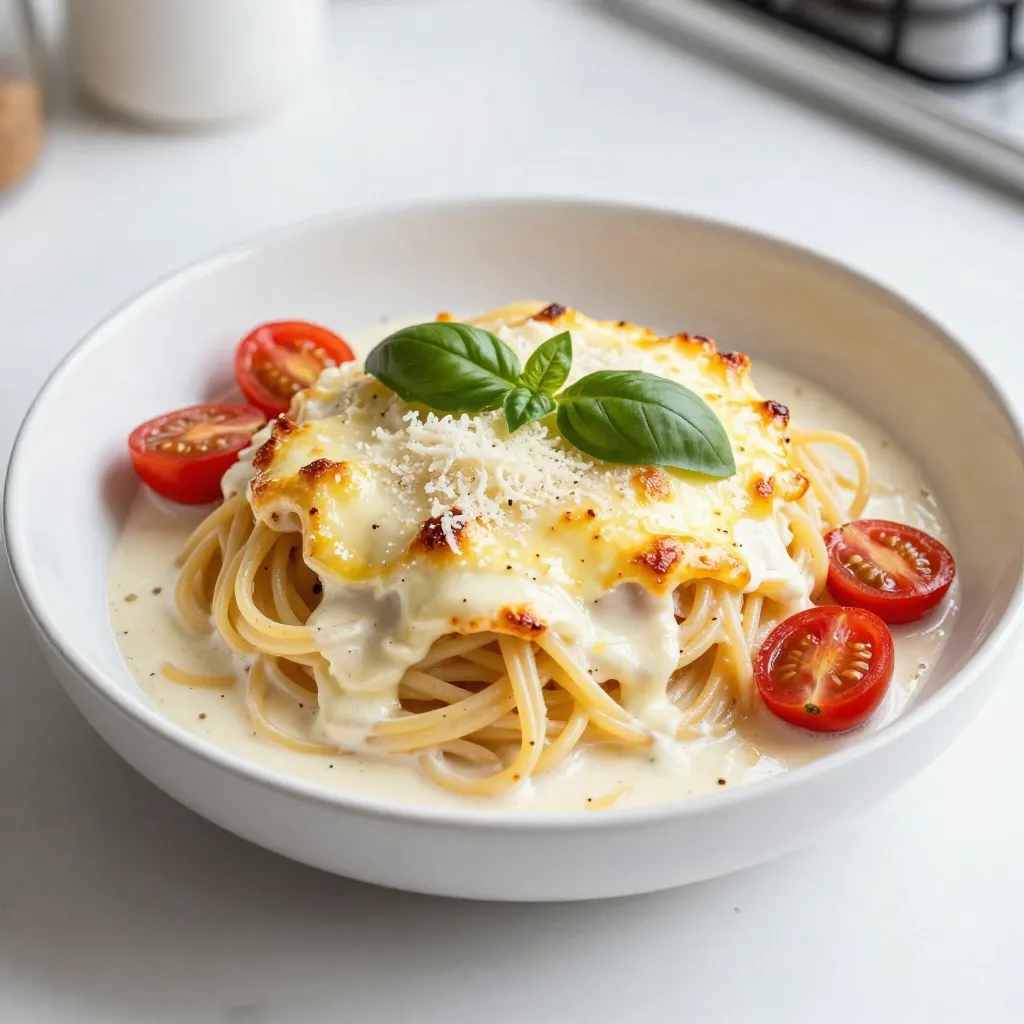
Creamy Baked Spaghetti with Mozzarella Delight

Discover the joy of making Creamy Baked Spaghetti with Mozzarella Delight. This dish hugs your taste buds with rich, cheesy goodness. It’s warm, comforting, and perfect for gatherings or family dinners. I’ll guide you through each step, from selecting the best ingredients to achieving the perfect bake. Ready to impress your loved ones? Let’s get cooking and make mealtime unforgettable!
Why I Love This Recipe
- Comforting Creaminess: This dish is the epitome of comfort food, with a rich and creamy sauce that wraps around each spaghetti strand beautifully.
- Cheesy Goodness: With layers of mozzarella and Parmesan, every bite is a cheesy delight that will satisfy any cheese lover’s cravings.
- Easy to Make: This recipe comes together quickly, making it perfect for busy weeknights while still being impressive enough for guests.
- Versatile Topping Options: The addition of cherry tomatoes or fresh herbs allows for customization, adding a burst of color and flavor to the dish.
Ingredients
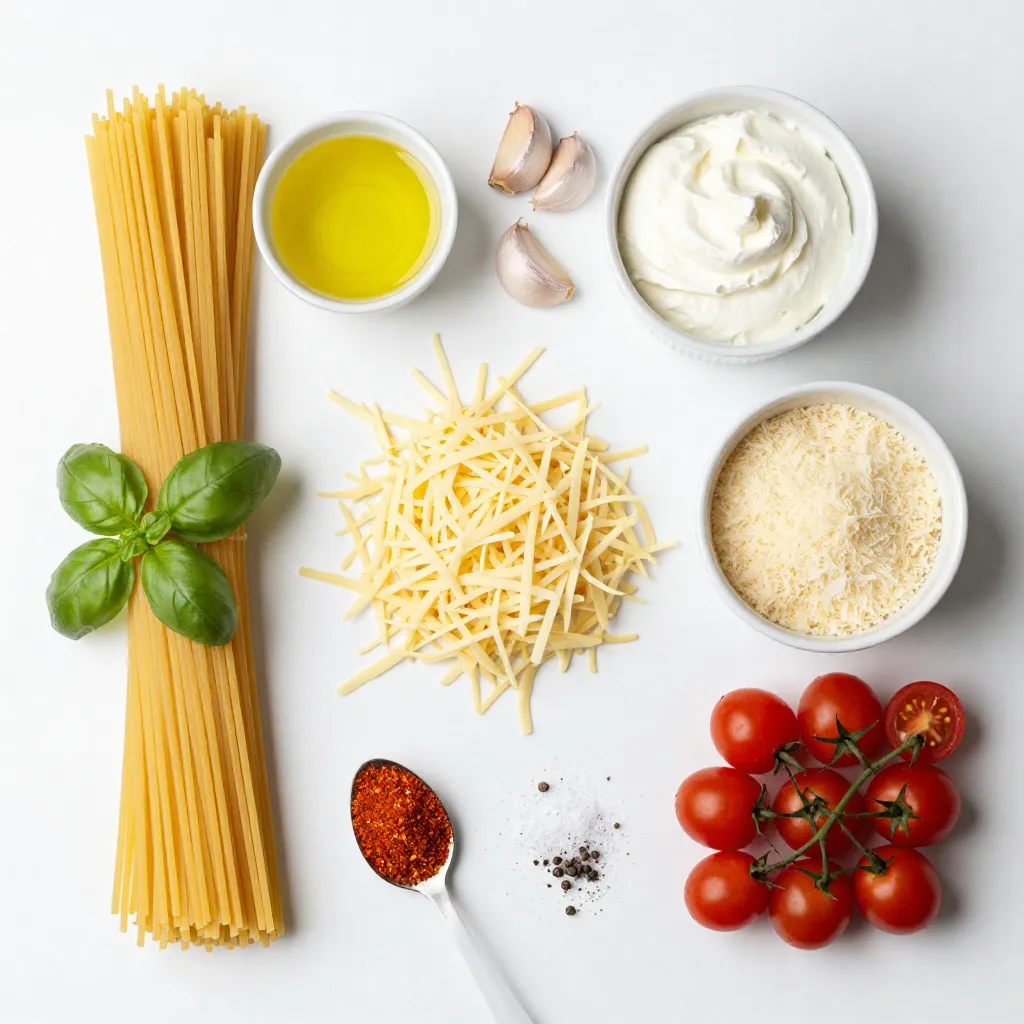
List of Ingredients
– 12 oz spaghetti
– 1 tablespoon olive oil
– 3 cloves garlic, minced
– 1 cup heavy cream
– 1 cup ricotta cheese
– 1 ½ cups shredded mozzarella cheese
– 1 cup grated Parmesan cheese
– ¼ cup fresh basil, chopped
– 1 teaspoon Italian seasoning
– Salt and pepper to taste
– ½ cup cherry tomatoes, halved (optional, for topping)
Measuring and Prepping Ingredients
Start with reliable measuring tools. Use a kitchen scale for the spaghetti to ensure you get the right amount. Measure the cream and cheeses in dry measuring cups for accuracy. Mince the garlic finely, so it blends well in the sauce. Chop the fresh basil with a sharp knife for even pieces. This helps release its full flavor. Halving cherry tomatoes adds color and freshness, but it’s up to your taste.
Tips for Quality Ingredients
Always choose fresh ingredients for the best flavor. Look for firm tomatoes without blemishes. Buy high-quality cheese; it really makes a difference in taste. When possible, use fresh basil instead of dried for a vibrant flavor. For the pasta, pick a brand you trust for a great texture. Always check expiration dates on dairy products to ensure freshness.
Step-by-Step Instructions
Preparation of Spaghetti
Start by boiling water in a large pot. Make sure to add a good amount of salt. This helps flavor the spaghetti as it cooks. Once the water is boiling, add 12 oz of spaghetti. Cook it according to the package instructions. You want it to be al dente, which means firm but not hard. After cooking, drain the spaghetti and set it aside.
Making the Creamy Sauce
In a large skillet, heat 1 tablespoon of olive oil over medium heat. When the oil is hot, add 3 cloves of minced garlic. Sauté for about 1 minute until the garlic smells good. Lower the heat to a gentle simmer. Next, pour in 1 cup of heavy cream and add 1 cup of ricotta cheese. Sprinkle in 1 teaspoon of Italian seasoning and season with salt and pepper to taste. Stir the sauce for about 2-3 minutes. This helps all the flavors mix well.
Assembling and Baking the Dish
Now it’s time to combine everything. Add the drained spaghetti to the skillet with the creamy sauce. Stir well until every piece of spaghetti is coated. Fold in ¼ cup of chopped basil and half of both 1 ½ cups of shredded mozzarella and 1 cup of grated Parmesan cheese. This adds richness to the dish.
Next, lightly grease a 9×13 inch baking dish. Pour the creamy spaghetti mixture into the dish, spreading it evenly. Top with the remaining mozzarella and Parmesan cheeses. If you like, scatter ½ cup of halved cherry tomatoes on top for a fresh touch.
Place the dish in your preheated oven at 350°F (175°C). Bake for 25-30 minutes. You want the top to be golden brown and bubbly. After baking, let the dish sit for a few minutes before serving. This helps the flavors settle and makes it easier to serve.
Tips & Tricks
Perfecting the Creamy Texture
To get a rich and creamy sauce, use heavy cream and ricotta cheese. These two ingredients blend well, creating a smooth texture. Be sure to heat them slowly. This helps the flavors mix without curdling. Stir the sauce gently to avoid lumps. If your sauce feels too thick, add a splash of pasta water for a lighter feel.
Achieving the Perfect Bake
Baking at 350°F (175°C) gives the dish a golden top. This temperature allows the cheeses to melt and bubble without burning. Cover the dish with foil for the first 20 minutes. This keeps moisture in and helps the pasta cook evenly. Remove the foil for the last 10 minutes to let the top crisp up.
Presentation and Serving Suggestions
Serve the creamy baked spaghetti in individual bowls. This adds a nice touch for guests. Garnish each bowl with fresh basil leaves for color and flavor. If you want to impress, consider adding cherry tomatoes on top before baking. They add a bright pop and a hint of sweetness. Pair this dish with a crisp side salad for a full meal.
Pro Tips
- Perfect Pasta: To achieve the best texture, cook the spaghetti until it is al dente, as it will continue to cook in the oven.
- Cheese Choices: Feel free to experiment with different cheese blends, such as adding a bit of goat cheese for extra creaminess.
- Herb Freshness: For maximum flavor, add fresh herbs right before serving, as they lose potency when cooked for too long.
- Make Ahead: This dish can be assembled a day in advance; just cover and refrigerate it until you’re ready to bake.
Variations
Adding Protein Options
You can easily boost the protein in your creamy baked spaghetti. Try adding cooked chicken, beef, or sausage. Shredded rotisserie chicken works great for quick prep. Ground beef gives a hearty touch. You can also use turkey sausage for a lighter option. Just brown your choice in the skillet before adding the creamy sauce. This step gives you a rich flavor and a filling meal.
Alternate Cheese Choices
While mozzarella is a star in this dish, don’t be shy with cheese. You can mix in cheddar for a sharp taste. Gouda adds a nice smokiness, and feta gives a tangy kick. If you’re feeling adventurous, try blue cheese for a bold twist. Just remember to balance strong flavors with the creamy sauce. This way, your dish remains rich but not overwhelming.
Vegetable Add-Ins
Adding vegetables is a smart way to sneak in nutrients. Spinach works well; just toss it into the sauce until it wilts. Zucchini or bell peppers add color and crunch. For a sweet touch, try roasted butternut squash. Just sauté your veggies before mixing them in. This will help them stay tender and flavorful in your creamy baked spaghetti.
Storage Info
How to Store Leftovers
To store leftovers, let the dish cool first. Transfer any uneaten spaghetti to an airtight container. Keep it in the fridge for up to three days. This helps keep the flavors fresh. For best taste, use it soon.
Reheating Recommendations
When ready to eat, preheat your oven to 350°F (175°C). Place the leftover spaghetti in an oven-safe dish. Cover it with foil to prevent drying. Heat for about 15-20 minutes. If you’re in a hurry, you can microwave it. Heat in short bursts, stirring often, until warm.
Freezing Instructions
To freeze, make sure the dish is completely cooled. Place portions in freezer-safe bags or containers. Remove as much air as possible to avoid freezer burn. You can freeze it for up to three months. When you’re ready to eat, thaw it in the fridge overnight. Then, reheat as described above. Enjoy your creamy baked spaghetti at a later date!
FAQs
Can I use different pasta types?
Yes, you can use different pasta types. Spaghetti works well, but you can try penne, fusilli, or rigatoni. Just ensure the pasta cooks to al dente for the best texture. Each shape holds the sauce differently, adding fun variety to each bite.
How do I make it gluten-free?
To make this dish gluten-free, choose gluten-free pasta. Many brands offer great alternatives that taste good. You may also want to check all other ingredients, like sauces and cheeses, to confirm they are gluten-free. This way, everyone can enjoy this creamy delight.
Can I prepare this dish in advance?
Absolutely! You can prepare it ahead of time. Cook the spaghetti and mix it with the sauce. Place everything in the baking dish, cover it, and store it in the fridge for up to two days. When you are ready to eat, just bake it. This makes meal prep easy and stress-free.
This blog post covered key steps for making a great creamy spaghetti dish. I shared the best ingredients, preparing and measuring tips, and how to make a rich sauce. You learned tricks to craft a perfect bite and tasty variations to try.
Finally, remember that great meals start with quality ingredients and smart techniques. Enjoy experimenting with flavors and sharing your results! Happy cookin

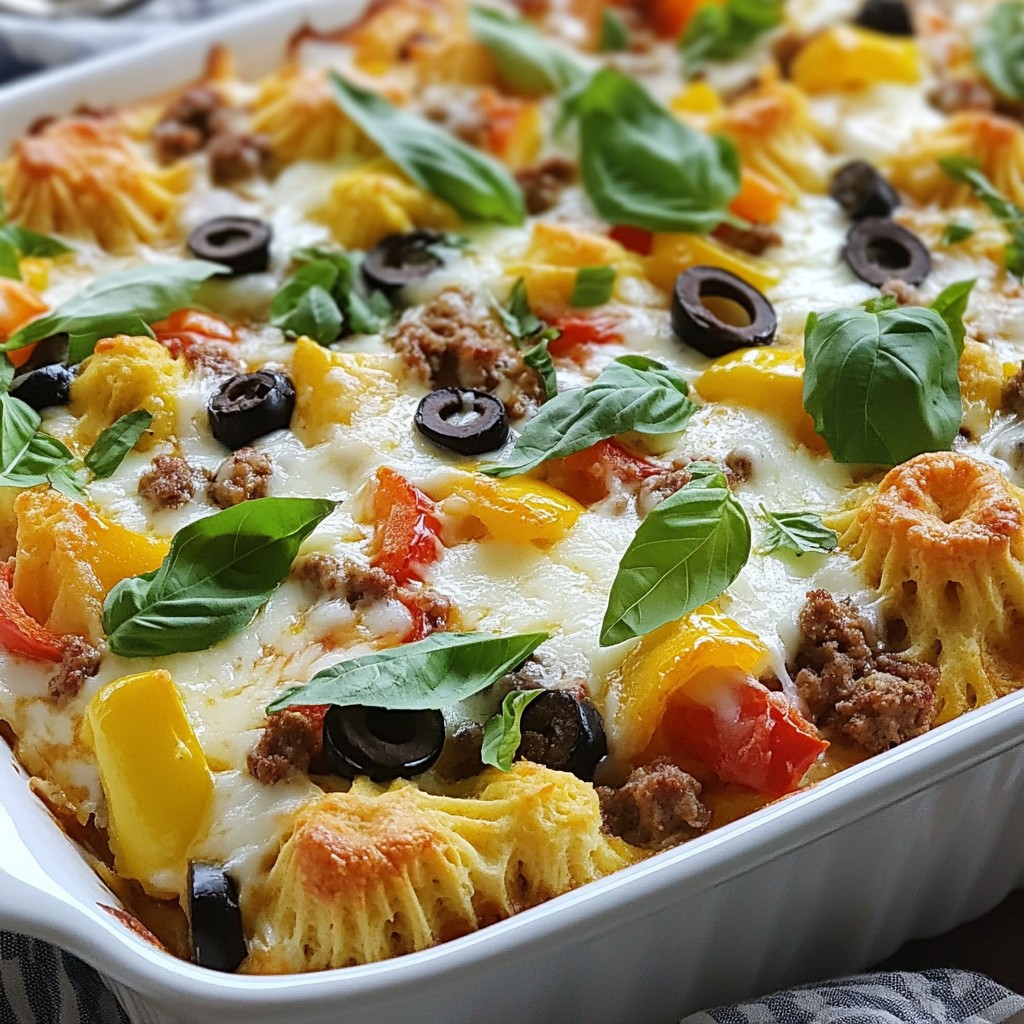
Creamy Baked Spaghetti with Mozzarella
Ingredients
- 12 oz spaghetti
- 1 tablespoon olive oil
- 3 cloves garlic, minced
- 1 cup heavy cream
- 1 cup ricotta cheese
- 1.5 cups shredded mozzarella cheese
- 1 cup grated Parmesan cheese
- 0.25 cup fresh basil, chopped
- 1 teaspoon Italian seasoning
- to taste Salt and pepper
- 0.5 cup cherry tomatoes, halved (optional, for topping)
Instructions
- Preheat your oven to 350°F (175°C) to prepare for baking.
- In a large pot, bring water to a boil and add a generous amount of salt. Cook the spaghetti according to the package instructions until it reaches an al dente texture, then drain and set aside.
- Meanwhile, in a large skillet over medium heat, add the olive oil. Once hot, incorporate the minced garlic and sauté for about 1 minute, just until fragrant.
- Lower the heat to a gentle simmer and mix in the heavy cream, ricotta cheese, Italian seasoning, along with salt and pepper to taste. Stir for 2-3 minutes, allowing the ingredients to blend and warm through.
- Add the drained spaghetti into the skillet with the creamy sauce, stirring thoroughly until every strand is well-coated in the rich mixture.
- Fold in the chopped basil and half of both the mozzarella and Parmesan cheeses, ensuring an even distribution throughout the pasta.
- Lightly grease a 9x13 inch baking dish and transfer the creamy spaghetti mixture into it, spreading it out evenly.
- Top with the remaining mozzarella and Parmesan cheeses, then if desired, scatter the halved cherry tomatoes over the surface for a burst of color and fresh flavor.
- Place the dish in the preheated oven and bake for 25-30 minutes, or until the top is golden brown and bubbly in appearance.
- Once baked, remove from the oven and allow it to stand for a few minutes before serving to help set the dish.


. Enjoy your cooking! To boost flavor, use fresh herbs. Fresh basil adds a bright note. You can also try parsley or thyme. Adding lemon zest brings a nice zing. For a kick, sprinkle in some red pepper flakes. If you want more depth, use vegetable broth instead of water. You can even roast the zucchini and corn first to enhance their sweetness. One common mistake is overcooking the orzo. Keep a close eye on it as it simmers. If you let it cook too long, it can become mushy. Another mistake is not seasoning enough. Taste and adjust with salt and pepper during cooking. Lastly, don’t skip the resting time after cooking. This helps the flavors blend better. To serve, use a large bowl for a family-style look. Spoon the orzo into the center, leaving some space around it. Top with fresh basil leaves for color. You can also add a sprinkle of cheese for richness. Serve with a lemon wedge on the side. This adds a pop of color and lets guests brighten their dish as they like. For the full recipe, be sure to check out the detailed cooking steps. {{image_4}} This dish shines as a vegetarian option. It uses fresh veggies and orzo, making it filling. To make it vegan, simply ensure your vegetable broth is plant-based. You can also add more protein by including chickpeas or tofu. These additions will keep the dish hearty and satisfying. If you need a gluten-free version, swap the orzo for gluten-free pasta. There are many types available, like rice or quinoa pasta. Just check the cooking time, as it may vary from regular orzo. This way, you can enjoy the flavors without worrying about gluten. Feel free to get creative with seasonal veggies! Try adding diced tomatoes, spinach, or bell peppers. You could also include peas or carrots for extra color and nutrition. Just remember to adjust the cooking time, so everything remains tender and vibrant. These changes can make the dish fun and new each time you prepare it. For the complete recipe, check the Full Recipe section. To keep your One Pan Summer Corn Zucchini Orzo fresh, let it cool first. Transfer the dish into an airtight container. Store it in the fridge for up to three days. This helps maintain its flavors and textures. When you are ready to enjoy leftovers, you can reheat them easily. Place the orzo in a skillet over low heat. Add a splash of vegetable broth or water to prevent sticking. Stir occasionally until it is heated through. This should take about 5 to 7 minutes. You can also use a microwave. Heat for one minute, then stir and check if it's warm. Repeat until heated. If you want to save your dish for later, freezing is a great option. Allow the orzo to cool completely. Portion it into freezer-safe bags or containers. Make sure to remove as much air as possible. Label the bags with the date. You can freeze it for up to three months. For best results, thaw it overnight in the fridge before reheating. For the full recipe, check out the detailed instructions above. To cook orzo perfectly, start with plenty of water. Use a ratio of 1 cup of orzo to 2 cups of water or broth. Bring the liquid to a boil, then add the orzo. Stir it gently to prevent sticking. Cook for about 8 to 10 minutes. Taste it a minute or two before the time is up. You want it al dente, firm but not hard. If there’s excess liquid, drain it off. This method keeps your orzo from getting mushy. Yes, you can use frozen vegetables in this dish. They save time and are often just as healthy. For the One Pan Summer Corn Zucchini Orzo, frozen corn works great. Just add it directly to the skillet. You may need to cook it a bit longer. Frozen zucchini can also work, but fresh zucchini gives a nicer texture. If using frozen, make sure to thaw it first if you want even cooking. Many sides go well with this dish. Here are some ideas: - Grilled Chicken: Adds protein and a nice char. - Garlic Bread: Perfect for soaking up extra broth. - Simple Salad: A light salad with lemon dressing complements the dish. - Roasted Vegetables: A mix of seasonal veggies enhances the meal. These sides make your meal more complete and satisfying. For the full recipe, check out the details above! You learned about the key ingredients and how to cook them. I covered steps, tips, and tricks for a great dish. You also found ways to adapt the recipe for special diets. Storing and reheating leftovers will help cut waste. Always aim for flavor and avoid common mistakes. With these insights, you'll create a tasty one-pan summer corn zucchini orzo. Enjoy your cooking journey and impress your guests!](https://fastmealmate.com/wp-content/uploads/2025/07/e3382d29-f029-483c-a1d1-82293022c013-768x768.webp)
![- 3 medium apples, peeled, cored, and diced into small cubes - 1 cup walnuts, finely chopped to enhance texture - 1 teaspoon ground cinnamon for warmth - 1/2 cup grape juice (preferably 100% juice for a natural flavor) - 2 tablespoons honey (or agave syrup for a vegan alternative) - 1/4 cup raisins for sweetness and chew - 1 tablespoon fresh lemon juice for brightness To make Passover charoset with grape juice, I focus on using fresh and quality ingredients. Apples are the star here. I love using sweet and crisp varieties like Fuji or Honeycrisp. They bring great flavor and texture. Walnuts give a nice crunch and a bit of richness. Ground cinnamon adds warmth and depth. Grape juice not only sweetens but also ties all the flavors together. - For a vegan option, swap honey for agave syrup. - If nuts are a concern, replace walnuts with sunflower seeds. I enjoy adapting recipes to fit different needs. If you want a vegan charoset, agave syrup works well in place of honey. If you want a nut-free version, sunflower seeds give a similar crunch without the allergens. - Choose firm apples that are not bruised. - Look for grape juice that is 100% juice without added sugars. When selecting apples, feel them in your hand. They should feel firm and solid. For grape juice, read the label. Aim for juices that are pure and natural. This choice enhances the taste of your charoset. For the full recipe, check the details above. Enjoy your cooking! - Dicing Apples and Chopping Walnuts Start by peeling, coring, and dicing three medium apples into small cubes. Use a sharp knife for safety and precision. Next, finely chop one cup of walnuts. This adds a nice crunch to your charoset. Make sure the apples and walnuts are mixed well in a large bowl. - Mixing Cinnamon with Apples and Walnuts Now, sprinkle one teaspoon of ground cinnamon over the apple and walnut mix. Toss everything gently to coat the pieces evenly. The scent of cinnamon will make your kitchen smell warm and inviting. - Whisking Ingredients Together In a small bowl, whisk together half a cup of grape juice, two tablespoons of honey (or agave syrup), and one tablespoon of fresh lemon juice. Make sure the mixture is smooth and well-blended. This juice mix will bring sweetness and tang to the charoset. - Tossing Mixture for Even Coating Carefully pour the grape juice mixture over the apple-walnut blend. Stir gently until everything is well coated. This ensures that each bite is full of flavor. Next, add a quarter cup of raisins to the mix. Give it another gentle stir to evenly distribute the raisins. - Serving Suggestions Cover the bowl with plastic wrap or a lid and place it in the refrigerator. Let it chill for at least one hour. This helps the flavors meld beautifully. For serving, transfer the charoset to a decorative platter or individual bowls. A light sprinkle of cinnamon on top adds visual appeal. You can find the full recipe [here]. To make the best charoset, chill it for at least one hour. This time helps the flavors mix well. The longer it sits, the better it tastes. If you have time, chill it overnight for even more flavor. For flavor enhancements, try adding spices. A pinch of nutmeg adds warmth. You can also mix in a splash of orange juice for a citrus twist. This makes your charoset unique and exciting. When serving, aim for a beautiful look. Place the charoset in a nice bowl. For eye appeal, sprinkle extra cinnamon on top. You can also add whole walnuts or a few raisins for color. These simple touches make your dish stand out. One common mistake is overmixing the ingredients. Mixing too much can turn the apples mushy. Instead, mix gently to keep the cubes intact. This keeps the texture fresh and enjoyable. Another mistake is using the wrong apple varieties. For charoset, use sweet apples like Honeycrisp or Fuji. Avoid tart apples, as they can spoil the flavor balance. Choosing the right apples makes a big difference in taste. {{image_4}} When I think of Passover charoset, I picture the classic blend of apples and nuts. The traditional recipe sticks to simple flavors. It uses just apples, walnuts, and a touch of cinnamon. This mix brings a sweet and nutty taste that feels like home. Modern takes on charoset can be more creative. You can add dried fruits like apricots or figs for a twist. Some people also like to mix in spices like nutmeg or ginger. These small changes can make your charoset unique, while still honoring its roots. If you need a gluten-free charoset, you're in luck! All the main ingredients are naturally gluten-free. Just double-check your walnuts and any additional ingredients for cross-contamination. For vegan options, swap honey with agave syrup. This keeps the sweetness without using animal products. If you want a low-sugar version, use less honey or agave. You can rely more on the natural sweetness of the apples and grapes. Charoset varies across cultures. For example, in Sephardic traditions, you may find charoset made with dates and red wine. This adds a rich, deep flavor. In Ashkenazi traditions, the apple and walnut combo is more common. You can also explore different styles, like adding pomegranate seeds for a fresh taste. Each variation tells a story of its own, connecting us to our heritage. So, feel free to experiment and find what speaks to you! For the full recipe, check out my Passover Charoset Delight. To keep your charoset fresh, refrigerate it right after making it. Place it in an airtight container. This helps keep the flavors strong and the texture nice. If you have leftovers, they will stay tasty in the fridge for several days. You can also freeze charoset if you want to save it for later. Use a freezer-safe container and leave some space at the top. This allows it to expand as it freezes. Just remember to thaw it in the fridge before serving. Charoset lasts about 3 to 5 days in the fridge. If you freeze it, it can last for about 3 months. Always check for any off smells or changes in texture before eating. This way, you can enjoy it at its best. When reheating charoset, do it gently. Use the microwave or a small pot. Heat it on low to keep it fresh. Stir it often to warm it evenly. You want to avoid cooking it too much. This helps maintain the great taste and texture you love. Passover Charoset is a sweet and chunky mix. It usually includes fruits, nuts, and wine or juice. This dish represents the mortar used by the Jewish people when they built in Egypt. It is an important part of the Passover Seder. During the Seder, we eat charoset to remember the hard work of our ancestors. The flavors remind us of the sweetness of freedom and the hope for a bright future. Yes, you can make Passover Charoset ahead of time. It is best to prepare it a day before. This allows the flavors to blend well. You should let it chill in the fridge for at least one hour. For best taste, the longer it sits, the better it becomes. Just cover it tightly to keep it fresh. Charoset pairs well with many foods. It goes nicely with matzah during Passover. You can also serve it with roasted meats or brisket. Some people like to add it to salads for a sweet crunch. Charoset's flavors balance well with savory dishes. Try it with cheese for a unique snack. This blog covered how to make Passover Charoset, from choosing the right ingredients to serving ideas. You learned about essential ingredients like apples and walnuts. I shared tips for easy substitutions and how to select quality items. You got step-by-step instructions, tricks for the best results, and variations to try. Proper storage and reheating tips help keep your Charoset fresh. Embrace this dish's significance and flavors. Enjoy making your own delicious Charoset this Passover!](https://fastmealmate.com/wp-content/uploads/2025/06/25826363-49ff-4690-9ead-27057b46bedc-768x768.webp)