
Classic Flaky Crust Quiche Divine and Tasty Recipe
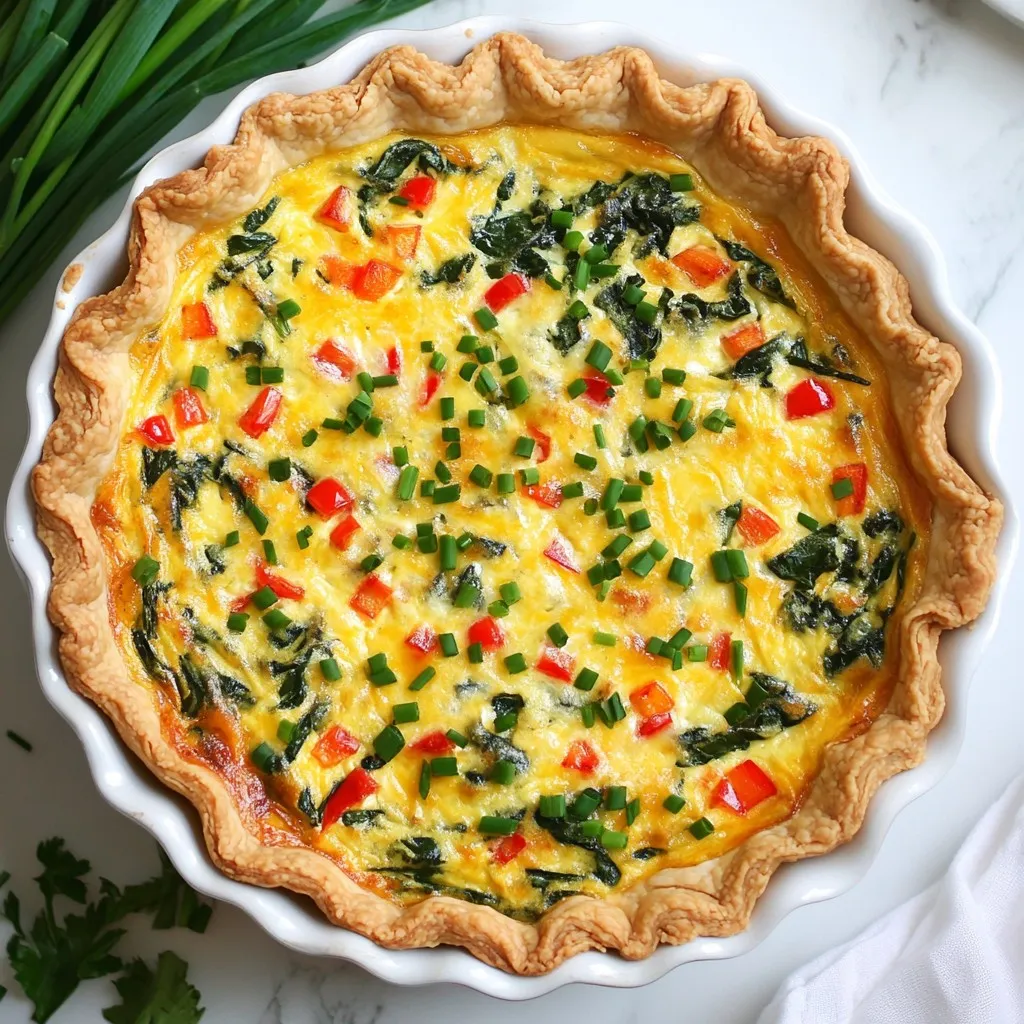
If you’re craving a dish that’s both hearty and delightful, you need to try my Classic Flaky Crust Quiche. This recipe is simple and packed with flavor, perfect for breakfast, brunch, or any meal. You’ll learn how to make a delicious, flaky crust from scratch and a tasty filling that will impress anyone at your table. Let’s dive into the world of quiche-making and elevate your cooking skills!
Why I Love This Recipe
- Delicious Flavor Combination: This quiche is a perfect blend of creamy, cheesy goodness with the freshness of spinach and bell peppers, making it a delightful dish for any meal.
- Versatile Ingredients: You can easily customize the filling with your favorite vegetables or meats, making it suitable for every palate and occasion.
- Easy to Prepare: The flaky crust is simple to make, and the filling comes together quickly, allowing you to enjoy a homemade quiche without a lot of hassle.
- Perfect for Any Meal: This quiche is great for breakfast, brunch, lunch, or dinner, and it can be served warm or at room temperature, making it a flexible choice for entertaining.
Ingredients
Classic Flaky Crust Ingredients
– 1 ½ cups all-purpose flour
– ½ teaspoon salt
– ½ cup unsalted butter, cold and cut into small cubes
– 4-6 tablespoons ice water
Quiche Filling Ingredients
– 4 large eggs
– 1 cup heavy cream
– 1 cup milk
– 1 cup shredded cheese (Gruyère or cheddar)
– 1 cup cooked spinach, thoroughly drained and chopped
– ½ cup diced bell peppers (mix of red and green for color)
– ¼ cup finely chopped onion
– Salt and pepper to taste
– A pinch of nutmeg (optional)
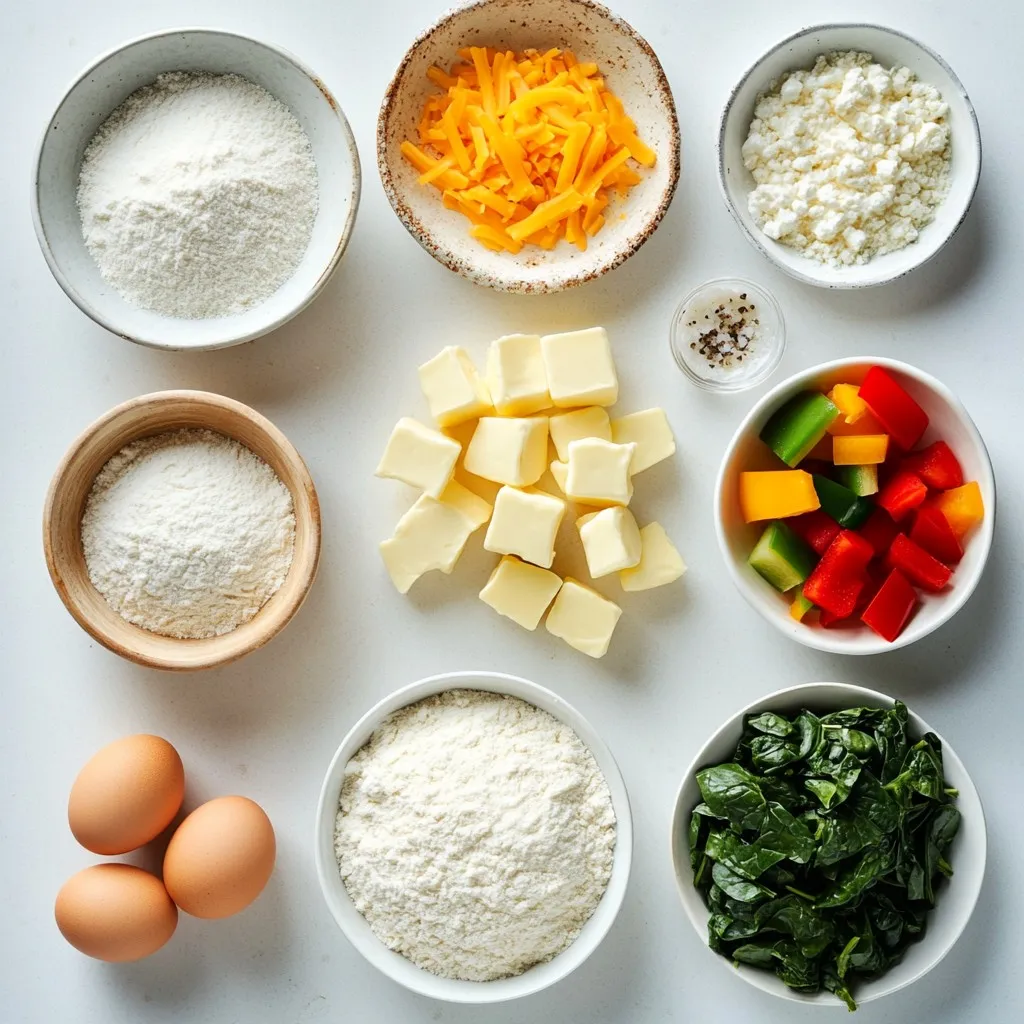
When making this quiche, you need fresh, quality ingredients. For the crust, start with all-purpose flour and salt. The cold butter is key; it adds flakiness. You can cut it into the flour using a pastry cutter or your fingers. This creates little bits of butter mixed with the flour.
Next, we need ice water. Adding this helps the dough come together. Start with four tablespoons and add more if needed. Don’t overmix; you want a tender crust.
For the filling, gather eggs, heavy cream, and milk. These create a rich base. The cheese gives flavor and creaminess. Gruyère or cheddar works well, but you can choose your favorite.
Then, add cooked spinach for color and nutrition. Diced bell peppers and chopped onion add texture and taste. Season with salt, pepper, and nutmeg for depth. This combination makes a well-balanced filling that everyone will love.
Step-by-Step Instructions
Making the Flaky Crust
1. Mixing dry ingredients: Start by placing 1 ½ cups of all-purpose flour and ½ teaspoon of salt in a large bowl. Use a whisk to mix them well. This step is key for a balanced flavor.
2. Incorporating butter: Cut ½ cup of cold, unsalted butter into small cubes. Add the butter to the flour mix. Use a pastry cutter or your fingers to blend until it looks like coarse crumbs. You want to see pea-sized pieces of butter.
3. Adding ice water: Gradually pour in 4-6 tablespoons of ice water. Start with 4 tablespoons. Mix gently after each addition until the dough holds together. Avoid overmixing to keep it tender and flaky.
Preparing the Filling
1. Whisking egg mixture: In a large bowl, whisk together 4 large eggs, 1 cup of heavy cream, and 1 cup of milk. Make sure everything is well combined. This mixture gives your quiche its creamy texture.
2. Incorporating cheese and vegetables: Stir in 1 cup of shredded cheese (Gruyère or cheddar), 1 cup of cooked spinach (drained and chopped), ½ cup of diced bell peppers, and ¼ cup of finely chopped onion. Mix well to ensure even flavor.
Assembling and Baking
1. Rolling out dough: On a floured surface, roll the chilled dough into a circle about 1/8 inch thick. Carefully place it in a 9-inch pie plate. Press it gently to fit, leaving a slight overhang.
2. Pouring filling into crust: Pour the egg and vegetable mixture into the prepared crust. Use a spatula to spread it evenly.
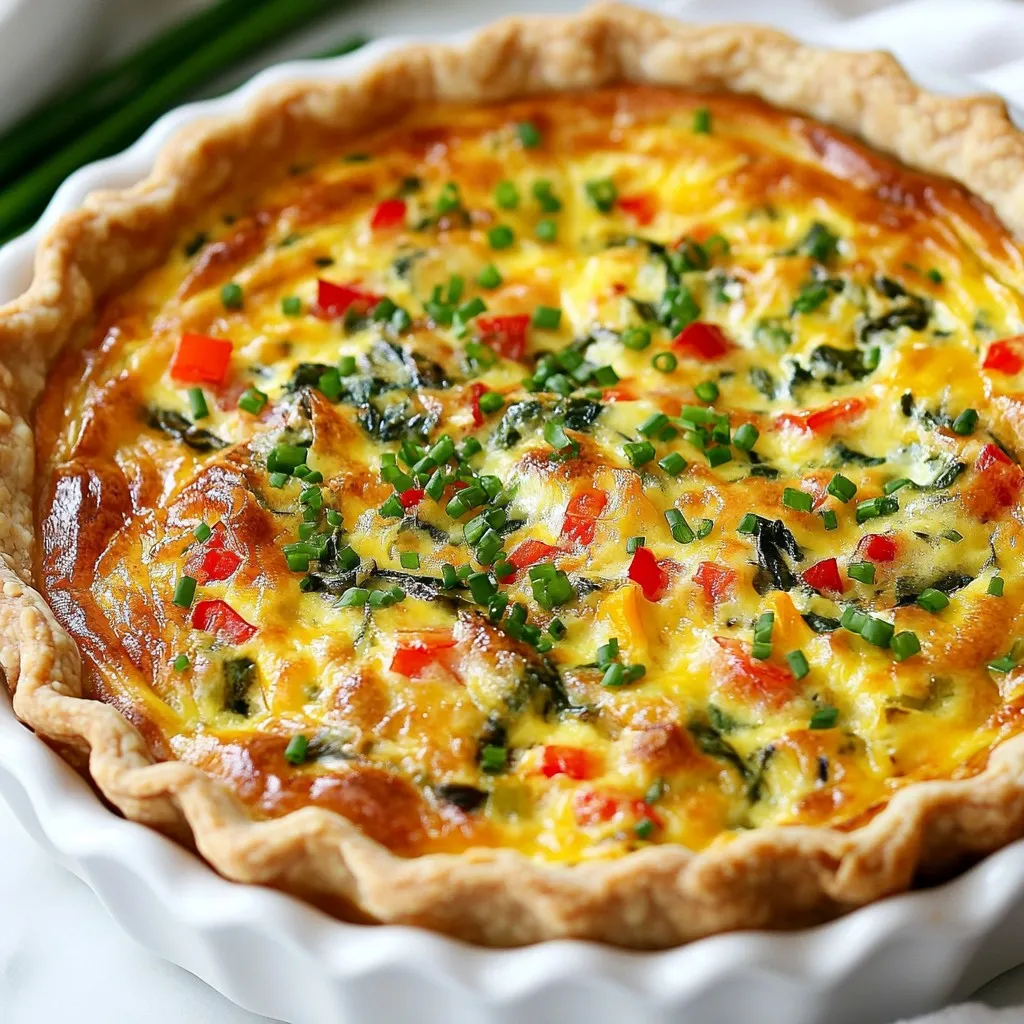
3. Baking time and temperature: Preheat your oven to 375°F (190°C). Bake for 35-40 minutes. The quiche should be golden and slightly puffed in the center. Let it cool for 10 minutes before slicing.
Tips & Tricks
Achieving a Flaky Crust
To get that perfect flaky crust, start with cold ingredients. Use cold butter, and don’t let it sit out. The cold butter creates pockets of steam during baking, which makes the crust flaky. If your butter is warm, your crust may turn out dense and tough. Also, avoid overmixing. Mix just until the dough holds together. This keeps the crust tender and light.
Flavor Enhancements for the Filling
To spice up your quiche, consider adding herbs and spices. Fresh herbs like thyme or basil elevate the flavors. You can also use spices like paprika or garlic powder for a kick. For cheese, Gruyère and cheddar are great, but don’t stop there. Try feta, goat cheese, or even creamy ricotta to mix things up. Each cheese adds its own unique taste and texture.
Presentation Suggestions
Make your quiche shine by garnishing it. Fresh herbs like chives or parsley add color and taste. You can arrange your quiche slices on a pretty platter to impress your guests. Pair it with a light green salad dressed in vinaigrette. This adds freshness and balances the rich flavors of the quiche. Enjoying these elements together makes for a delightful meal!
Pro Tips
- Chill Your Ingredients: Keeping the butter and water cold is crucial for a flaky crust. It prevents the butter from melting into the flour too quickly, ensuring the desired texture.
- Don’t Overmix: When forming the dough, mix just until it comes together. Overmixing can develop gluten, resulting in a tough crust instead of a tender one.
- Use a Blind Bake: If you want a crisper crust, consider blind baking the crust for about 10 minutes before adding the filling. This prevents sogginess.
- Experiment with Fillings: Feel free to customize your quiche with different vegetables, meats, or cheeses based on your preferences or what you have on hand. The possibilities are endless!
Variations
Different Cheese Options
You can change the cheese for a new taste. Feta cheese adds a tangy kick. Goat cheese brings creaminess and depth. If you prefer a vegan option, try cashew or almond cheese. These alternatives melt well and keep the dish rich.
Vegetable Variations
Seasonal veggies brighten your quiche. Think about adding asparagus in spring or zucchini in summer. For a heartier meal, toss in proteins like crispy bacon or diced ham. These choices add flavor and texture, making your quiche more filling.
Flavor Profiles
Try a Mediterranean twist by adding sun-dried tomatoes, olives, and herbs like oregano. This gives a bright, fresh taste. For something spicy, add jalapeños and pepper jack cheese for a southwestern flair. This variation adds a fun kick that wakes up your taste buds.
Storage Info
Refrigerating Leftovers
To keep your quiche fresh, store it in the fridge. Place the leftover slices in an airtight container. You can also wrap them in plastic wrap. This method helps prevent the quiche from drying out.
– Duration of freshness: Your quiche stays good for 3 to 4 days in the fridge. After that, it may lose its taste or texture. Always check for any signs of spoilage before eating.
Freezing Quiche
Freezing quiche can be a great way to save it for later. Follow these steps for best results.
– Let the quiche cool completely before freezing.
– Slice it into individual portions.
– Wrap each slice in plastic wrap, followed by aluminum foil.
– Place the wrapped slices in a freezer-safe bag or container.
This method helps keep the quiche fresh and tasty.
– Thawing and reheating techniques: To enjoy frozen quiche, move it to the fridge a day before. This allows it to thaw slowly. When you’re ready to eat, preheat your oven to 350°F (175°C). Bake the quiche slices for about 20-25 minutes until heated through. You can also use a microwave for quick reheating, but the oven gives a better texture.
FAQs
How do I make a gluten-free quiche crust?
To make a gluten-free quiche crust, use gluten-free flour. You can try almond flour or a blend of gluten-free flours. Mix the flour with salt and cold butter, similar to the regular crust. Add ice water slowly until the dough forms. Chill the dough before rolling it out. This method keeps the crust flaky and delicious.
Can I prepare the quiche in advance?
Yes, you can prepare the quiche in advance. You can make the crust and filling a day ahead. Store them separately in the fridge. Assemble the quiche just before baking. This way, you keep the crust crisp and fresh.
What’s the difference between quiche and frittata?
Quiche has a crust, while frittata does not. A frittata is like a baked omelet. It is thicker and uses more eggs than a quiche. Both are great for brunch, but the textures vary. Quiche is creamy and flaky, while frittata is fluffy.
How do I know when the quiche is done baking?
Check the quiche after 35 minutes in the oven. The top should be golden brown, and the filling should puff slightly. You can insert a knife into the center. If it comes out clean, your quiche is ready. Let it cool for 10 minutes before slicing.
You now have all the key steps to create a delicious quiche. From a classic flaky crust to a savory filling, each part plays a role. Remember to use cold ingredients for that perfect crust. Explore different cheeses and veggies to customize your quiche. Store leftovers properly to keep them fresh. With these tips and variations, you can impress anyone at your next meal. Enjoy the fun of making and sharing your quich
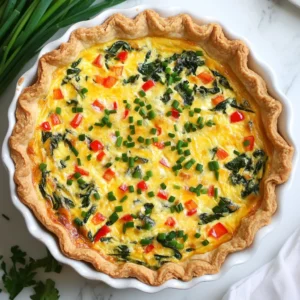
Classic Flaky Crust Quiche
Ingredients
- 1.5 cups all-purpose flour
- 0.5 teaspoon salt
- 0.5 cup unsalted butter, cold and cut into small cubes
- 4 tablespoons ice water
- 4 large eggs
- 1 cup heavy cream
- 1 cup milk
- 1 cup shredded cheese (Gruyère or cheddar)
- 1 cup cooked spinach, thoroughly drained and chopped
- 0.5 cup diced bell peppers (mix of red and green for color)
- 0.25 cup finely chopped onion
- Salt and pepper to taste
- A pinch of nutmeg (optional)
Instructions
- Make the Flaky Crust: In a spacious mixing bowl, combine the flour and salt together. Add the cold, cubed butter into the bowl. Using a pastry cutter, fork, or your fingers, blend the butter into the flour mixture until it resembles coarse crumbs with pea-sized butter pieces remaining.
- Form the Dough: Gradually add the ice water, starting with 4 tablespoons, mixing gently after each addition. Continue adding water, one tablespoon at a time, until the dough comes together without being sticky. Avoid overmixing to keep the crust tender.
- Chill the Dough: Shape the dough into a flat disc, wrap it tightly in plastic wrap, and place it in the refrigerator to chill for at least 30 minutes. This helps to relax the gluten and firm up the butter for a flakier crust.
- Preheat the Oven: When you are ready to bake, preheat your oven to 375°F (190°C).
- Roll Out the Dough: On a floured surface, roll the chilled dough into a circle about 1/8 inch thick. Carefully transfer the rolled dough into a 9-inch pie plate, pressing it gently into the edges while leaving a slight overhang. Trim any excess dough, folding the edges under if desired for a thicker crust edge.
- Prepare the Filling: In a large bowl, whisk together the eggs, heavy cream, and milk until well combined. Season the mixture with salt, pepper, and a pinch of nutmeg if you choose to use it for extra flavor.
- Combine Ingredients: Stir in the shredded cheese, cooked spinach, diced bell peppers, and finely chopped onion. Mix everything until the ingredients are evenly distributed throughout the egg mixture.
- Assemble the Quiche: Pour the filling mixture into the prepared crust, using a spatula to ensure an even distribution of the filling.
- Bake: Place the quiche in the preheated oven and bake for 35-40 minutes, or until the top is a lovely golden brown and the filling is set and slightly puffed in the center. Allow it to cool for approximately 10 minutes before slicing to prevent the filling from spilling out.

![- 8 oz spaghetti or fettuccine - 3 large egg yolks - 1 whole egg - 1/2 cup finely grated Parmesan cheese - 1 tablespoon gochujang - 2 cloves garlic, minced - 1 tablespoon olive oil - 4 oz pancetta or diced turkey bacon (optional) - Salt and freshly cracked black pepper - Chopped green onions (for garnish) - Sesame seeds (for garnish) Gather these ingredients before you start cooking. This will make your process smooth and fun. The star of this dish is gochujang. It adds a deep heat and unique flavor. The creamy sauce comes from the eggs and cheese. The garlic and olive oil offer a nice aroma. If you want a meat option, use pancetta or turkey bacon. - Large pot - Medium mixing bowl - Large skillet - Tongs You need a large pot to boil the pasta. A medium mixing bowl helps mix the egg and cheese. The large skillet cooks the garlic and meat. Tongs are key to tossing your pasta with the sauce. Having the right tools makes cooking easier and more enjoyable. - Calories per serving: about 500 - Protein: 20g - Fat: 25g - Carbohydrates: 50g This dish is rich and filling. The calories come from the pasta, eggs, and cheese. It packs a good protein punch from the eggs and cheese. Enjoy it as a main meal or share it with a friend. For more details, check the Full Recipe for serving sizes and more tips. - Bring a large pot of salted water to a boil. - Cook spaghetti or fettuccine until al dente, about 8-10 minutes. First, salt the water. This helps the pasta taste great. When it boils, add the pasta. Stir it often. Before draining, save one cup of pasta water. This water helps make the sauce creamy later. - Whisk together egg yolks, whole egg, Parmesan, gochujang, and seasonings. - Heat olive oil and sauté garlic. In a medium bowl, mix the egg yolks, whole egg, and finely grated Parmesan cheese. Add gochujang and a pinch of salt and pepper. Whisk until it looks smooth. Heat olive oil in a skillet over medium heat. Add minced garlic. Sauté it for about 30 seconds. Watch for it to smell great and turn golden. - Cook pancetta or turkey bacon if using. - Toss drained pasta with garlic oil. - Mix in egg and gochujang mixture off the heat. If you want meat, add pancetta or turkey bacon now. Cook it until it is crispy, about 3-4 minutes. Then, toss the drained pasta into the skillet. Mix it well with the garlic oil. Off the heat, pour the egg and gochujang mixture over the hot pasta. Use tongs to toss it. The heat will cook the eggs gently, making a creamy sauce. Slowly add the reserved pasta water until the sauce is creamy and smooth. Taste and add more salt or pepper if you need to. Plate your Gochujang Carbonara right away. Enjoy the spicy twist! For the full recipe, check out the detailed steps and tips. To achieve a creamy sauce, start with room temperature eggs. Cold eggs can make the sauce clumpy. Whisk the yolks and the whole egg together well. This creates a smooth base. When you combine the egg mixture with the pasta, do it off the heat. The pasta should be hot enough to cook the eggs gently. Toss quickly with tongs. This helps make a rich sauce. If your sauce feels too thick, use reserved pasta water. Add it a little at a time. This water adds starch and helps to loosen the sauce. Keep tossing until you reach your desired creaminess. To boost the flavor, try adding spices. A pinch of red pepper flakes can add heat. Fresh herbs like parsley or basil can bring brightness. These small changes can really lift your dish. You can also experiment with different cheese. Pecorino Romano adds a sharp flavor. A mix of Parmesan and Pecorino can give you a nice depth. Use what you like best for a personal touch. One big mistake is overcooking the pasta. Al dente is best, as it will cook a bit more in the sauce. Always check the package time and taste a strand. Another mistake is scrambling the eggs. Keep the heat low when mixing the egg and pasta. If the skillet is too hot, the eggs will cook too fast. You want a creamy sauce, not scrambled eggs. {{image_4}} You can make a great vegetarian version of gochujang carbonara. Start by replacing the pancetta. Use mushrooms instead. They add a nice umami flavor. You can use shiitake or cremini mushrooms for this. Just sauté them in olive oil until they are golden and tender. Next, add seasonal vegetables. Think spinach, zucchini, or asparagus. They brighten up the dish and add color. Just toss them in the skillet with the garlic. This adds flavor and nutrition. Want more heat? You can increase the gochujang. Adding a little more will make it extra spicy. Just be careful! Start small and taste as you go. If you want to add other spices, try crushed red pepper flakes. They bring another layer of heat and flavor. Do you need a gluten-free option? You can easily swap out regular pasta for gluten-free pasta. There are many good brands available now. They work well in this recipe. You can also explore other noodle types. Try rice noodles or soba noodles. Each option gives a unique twist to the dish. They can bring different textures and flavors, making it fun to try new things. To keep your Gochujang Carbonara fresh, store it in an airtight container. Place the container in the fridge. Make sure to cool the pasta to room temperature before sealing. This helps prevent moisture buildup. Leftovers last about 3 days in the fridge. The best way to reheat carbonara is on the stove. Add a splash of water or broth to a skillet. Heat it over low to medium heat. Stir gently until warm. This keeps the sauce creamy and smooth. Avoid using the microwave, as it can dry out the pasta. You can freeze carbonara, but it may change texture. To freeze, place cooled portions in freezer-safe bags. Remove as much air as possible before sealing. For best taste, eat it within 1 month. When ready to eat, thaw it in the fridge overnight. Reheat gently on the stove with added liquid. This helps restore some of the creaminess. For the full recipe, check out the details above. Gochujang is a Korean chili paste. It has a deep red color. This paste is made from fermented soybeans, glutinous rice, and chili powder. Its flavor is sweet, spicy, and umami-rich. Gochujang adds a unique kick to many dishes. You can find it in Asian markets and some grocery stores. Yes, you can prep this dish ahead of time. Cook the pasta and store it in the fridge. Keep the sauce separate, so it stays creamy. When you are ready to eat, heat the pasta and mix in the sauce. This way, you enjoy fresh, tasty carbonara. If you lack pancetta, try turkey bacon or diced ham. For a vegetarian option, use mushrooms. Sauté them until golden and add them to the dish. You can also use smoked tofu for a plant-based protein. To make it milder, use less gochujang. You can start with half a tablespoon and taste it. If you want more heat, add a little more gochujang or some red pepper flakes. Adjust slowly until it meets your preference. For the complete steps and extra tips for making Gochujang Carbonara, click here: [Full Recipe]. This blog post covered how to make Gochujang Carbonara, from ingredients to storage tips. You learned about choosing the right pasta, creating a creamy sauce, and avoiding common cooking mistakes. No matter your taste, you can try variations like vegetarian options. Always store leftovers correctly to enjoy them later. Remember, cooking is fun, so feel free to experiment with flavors! Enjoy your delicious meal and impress others with your skills!](https://fastmealmate.com/wp-content/uploads/2025/06/8ba01260-66cf-4de4-8766-bae4801448e1-768x768.webp)