
Grilled Salmon with Mango Salsa and Coconut Rice Delight
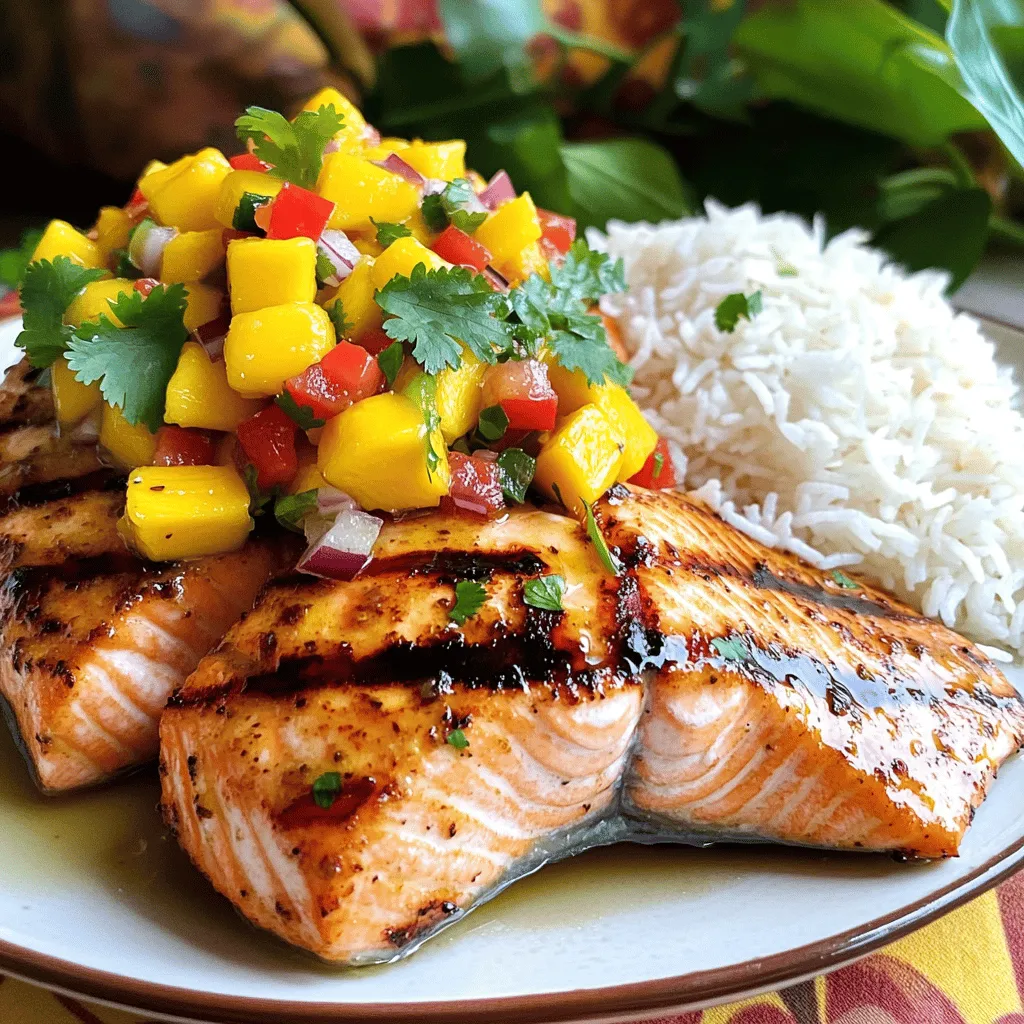
Looking for a fresh and bright meal? Dive into my recipe for Grilled Salmon with Mango Salsa and Coconut Rice Delight! This dish brings together juicy salmon, zesty mango salsa, and creamy coconut rice for a winning flavor combo. It’s perfect for a weeknight dinner or impressing guests. Follow along, and I’ll guide you through each step to create this tropical feast that’s as easy as it is delicious. Let’s get cooking!
Ingredients
Main Ingredients for Grilled Salmon
– 4 salmon fillets
– 2 tablespoons olive oil
– Salt and black pepper to taste
– Juice of 1 lime (plus zest for extra flavor)
Ingredients for Coconut Rice
– 1 cup jasmine rice
– 1 can (13.5 oz) coconut milk
– 1 cup water
Ingredients for Mango Salsa
– 1 ripe mango, diced into small cubes
– 1/2 red onion, finely chopped
– 1 red bell pepper, diced
– 1 jalapeño, finely chopped (optional for spice)
– 1/4 cup fresh cilantro, roughly chopped
– 1 tablespoon lime juice (freshly squeezed)
– Salt to taste
Each of these ingredients brings a unique flavor to the dish. The salmon fillets are fresh and rich. Olive oil adds depth, while lime juice brightens the taste. The coconut rice offers a creamy texture. Jasmine rice pairs perfectly with coconut milk.
Mango salsa is fresh and vibrant, combining sweet and savory notes. The ripe mango adds sweetness, while red onion and bell pepper add crunch. The cilantro gives a fresh zing, and lime juice ties it all together.
Step-by-Step Instructions
Preparing the Salmon
To start, you need to marinate the salmon. In a shallow dish, mix olive oil, lime juice, salt, and black pepper. Place the salmon fillets in the marinade. Make sure each fillet is well-coated. Let them marinate for about 15 minutes. This step helps the fish soak in the flavors.
Coconut Rice Preparation
Next, you prepare the coconut rice. Rinse 1 cup of jasmine rice under cold water until the water runs clear. This helps remove excess starch. In a medium saucepan, combine the rinsed rice, 1 can of coconut milk, 1 cup of water, and a pinch of salt. Bring this mixture to a gentle boil over medium heat.
Making the Mango Salsa
While the rice cooks, make the mango salsa. In a medium bowl, combine 1 diced mango, 1/2 finely chopped red onion, and 1 diced red bell pepper. If you like spice, add 1 finely chopped jalapeño. Stir in 1/4 cup of chopped cilantro and 1 tablespoon of lime juice. Add salt to taste. Mix well and set aside. This allows the flavors to blend.
Grilling the Salmon
Now it’s time to grill the salmon. Preheat your grill to medium-high. Take the marinated salmon out of the dish and place it skin-side down on the grill. Grill each fillet for 4-5 minutes per side. The salmon is done when it flakes easily with a fork.
Serving Suggestions
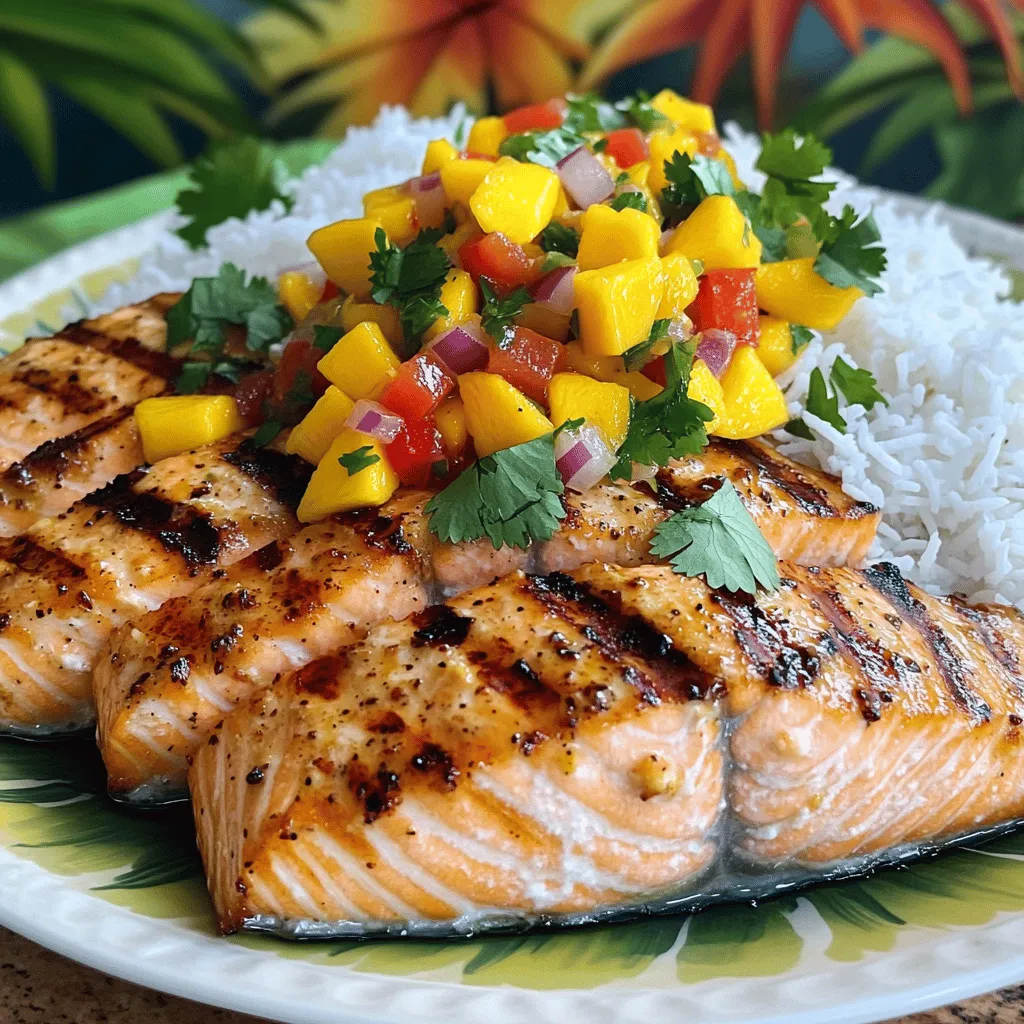
For serving, place a scoop of coconut rice next to each grilled salmon fillet. Top each piece of salmon with a generous amount of mango salsa. For a nice touch, garnish with lime wedges and a sprinkle of cilantro. You can also serve it on a large platter for a beautiful display.
Tips & Tricks
Perfecting the Grilled Salmon
To make the best grilled salmon, start with marinating. Use olive oil, lime juice, salt, and black pepper. Coat the salmon fillets well and let them sit for 15 minutes. This helps the fish absorb all those tasty flavors.
When grilling, preheat your grill to medium-high. Place the salmon skin-side down on the grill. Cook for 4-5 minutes on each side. Look for the salmon to flake easily with a fork. This shows it’s cooked just right.
Coconut Rice Secrets
For fluffy coconut rice, rinse jasmine rice under cold water until the water runs clear. This removes excess starch. Combine the rinsed rice with coconut milk and water in a pot. Add a pinch of salt for flavor.
Bring the mixture to a boil over medium heat. Once boiling, reduce the heat to low. Cover the pot tightly and simmer for about 15 minutes. After that, let it sit for another 5 minutes. Fluff it with a fork for light, airy grains.
Enhancing Mango Salsa
When making mango salsa, chop the ingredients evenly for the best texture. Dice the mango, red onion, and red bell pepper into small pieces. This helps all the flavors blend well.
Add fresh cilantro and lime juice for brightness. Don’t forget a pinch of salt. Let the salsa sit for a bit. This allows the flavors to mix and improve. For a bit of heat, add jalapeño to taste. Enjoy this fresh, zesty topping on your grilled salmon.
Variations
Alternative Proteins
If you want to switch things up, consider using chicken or tofu instead of salmon. Chicken thighs can work well. They stay juicy and soak up flavors nicely. For a plant-based option, tofu is a great choice. Use firm tofu and marinate it like salmon. Grill it for a nice texture. You can still enjoy the same delicious mango salsa and coconut rice with these proteins.
Different Rice Options
You can try other rice or grains if jasmine rice isn’t your favorite. Quinoa is a healthy and tasty swap. It cooks quickly and adds a nutty flavor. Brown rice is another option, giving a hearty feel. If you want something unique, try farro or barley for extra chew and flavor. Each will pair well with the grilled protein and mango salsa.
Salsa Adjustments
Feel free to get creative with your salsa. Add diced avocado for creaminess or substitute pineapple for a sweeter taste. You can also use different herbs, like mint or basil, for a fresh twist. If you love heat, toss in more jalapeño or a dash of hot sauce. The goal is to make the salsa your own while keeping that bright flavor.
Storage Info
Storing Leftovers
After enjoying your grilled salmon with mango salsa and coconut rice, you might have some leftovers. To keep them fresh, use an airtight container. Place the salmon, rice, and salsa in separate containers. This helps maintain their flavors and textures. Store them in the fridge. They should stay good for up to three days. Always let the food cool down before you put it away. This prevents condensation, which can make your food soggy.
Freezing Tips
If you want to save your leftovers for longer, freezing is a great option. Wrap each salmon fillet tightly in plastic wrap. This keeps air out and prevents freezer burn. For the coconut rice, put it in a freezer-safe bag. Squeeze out as much air as possible before sealing. You can freeze both for up to three months. Remember, the mango salsa does not freeze well. It’s best to enjoy it fresh.
Reheating Instructions
When you’re ready to eat your leftovers, reheating is easy. You can use a microwave or an oven. If you choose the microwave, place the salmon and rice in a safe dish. Heat it in short bursts of one minute, checking often. This keeps the food from drying out. If you prefer the oven, preheat it to 350°F (175°C). Place the salmon and rice in an oven-safe dish, cover with foil, and heat for about 15 minutes. This method helps retain moisture and flavor.
FAQs
How long should I marinate salmon?
Marinate salmon for at least 15 minutes. This time helps the fish absorb flavors well. For a deeper taste, you can marinate it for up to 1 hour. Just remember not to marinate too long. The acid in lime juice can cook the fish if left too long.
Can I make coconut rice without coconut milk?
Yes, you can! Use regular milk or almond milk instead. Each option gives a different flavor. Regular milk makes it creamier, while almond milk adds a nutty touch. You can also use water with a bit of coconut extract for a subtle flavor.
What goes well with grilled salmon?
Grilled salmon pairs well with many sides. Here are some great options:
– Steamed vegetables like broccoli or asparagus
– A fresh green salad with lemon dressing
– Quinoa for a healthy grain choice
– Roasted sweet potatoes for a sweet touch
– Garlic bread for a tasty crunch
These sides help balance the flavors of the salmon and add variety to your meal.
In this blog post, we explored how to make grilled salmon, coconut rice, and mango salsa. I shared step-by-step instructions for marinating salmon, cooking rice, and making fresh salsa. You also learned helpful tips to perfect each dish and variations for different proteins and grains.
Cooking can be fun and easy. Enjoy experimenting with these recipes. They offer great flavor and will impress anyone you serve. Happy cooking!

![- 1 tablespoon olive oil - 1 medium onion, finely diced - 2 cloves garlic, minced - 2 medium carrots, peeled and diced - 1 medium zucchini, diced - 1 cup green peas (fresh or frozen) - 1 cup cauliflower florets, chopped - 4 cups vegetable broth - 1 cup coconut milk To make a creamy vegetable soup, start with olive oil, onion, and garlic. The olive oil adds a nice richness. The onion gives a sweet base flavor. Garlic brings a warm, aromatic touch. Next, choose fresh vegetables like carrots, zucchini, and cauliflower. Carrots add sweetness and color. Zucchini brings a mild flavor and a tender texture. Cauliflower gives the soup a creamy feel when blended. For the broth and creaminess, use vegetable broth and coconut milk. Vegetable broth adds depth. Coconut milk makes the soup rich and smooth. Together, these ingredients create a lovely balance of flavors. - 1 teaspoon dried thyme - ½ teaspoon smoked paprika - Salt and freshly ground black pepper to taste - Fresh parsley, chopped (for garnish) Now, season your soup with dried thyme and smoked paprika. Thyme adds a warm herbal note. Smoked paprika gives a hint of smokiness. Use salt and pepper to taste, adjusting as you go. Finally, top your soup with fresh parsley. It adds a pop of color and a fresh taste. This simple garnish makes the soup look inviting and bright. For the complete recipe, check the [Full Recipe]. Start by heating 1 tablespoon of olive oil in a large pot over medium heat. Once the oil is hot, add 1 medium onion, finely diced, and 2 cloves of minced garlic. Sauté these for about 3-4 minutes. Keep stirring until the onion is soft and clear. This step builds a strong flavor base for your soup. Next, add 2 medium carrots, peeled and diced, along with 1 medium zucchini, diced, and 1 cup of chopped cauliflower florets. Cook these vegetables for an additional 5 minutes. Stir often until they begin to soften. This mix of veggies adds color and nutrition to your dish. Now, pour in 4 cups of vegetable broth. This broth acts as the heart of the soup. Add 1 cup of green peas, 1 teaspoon of dried thyme, and ½ teaspoon of smoked paprika. Bring this mixture to a boil. After it boils, lower the heat and let it simmer uncovered for about 15 minutes. The goal is to cook until all the vegetables are tender and full of flavor. Once the soup has simmered, remove it from the heat. Use an immersion blender to carefully purée the soup until it is smooth and creamy. If you prefer, you can also transfer the soup in batches to a countertop blender. Blend until the mixture is silky. This step is key for achieving that creamy texture we all love. Return the pot to low heat. Now, stir in 1 cup of coconut milk. This ingredient adds a rich creaminess and a hint of sweetness. Season the soup with salt and freshly ground black pepper to taste. Gently warm the soup for about 5 minutes. This will make sure everything is hot without boiling. Serve the soup hot in bowls. Garnish with fresh chopped parsley for a pop of color. Enjoy your creamy vegetable soup, made with love and fresh ingredients! For the complete recipe, check out the Full Recipe section. Choosing the right vegetables is key to great flavor. I love using fresh carrots, zucchini, and cauliflower. Each adds a unique taste. You can also add sweet potatoes or bell peppers for a twist. Always pick vegetables that are in season. They taste better and have more nutrients. Adjusting the creaminess level is easy. For a lighter soup, use less coconut milk. If you like it rich, add more. You can also blend in some white beans for extra creaminess without extra calories. Garnishing the soup makes it look stunning. I like to sprinkle fresh parsley on top. It adds a pop of color and fresh taste. You can also drizzle a bit of coconut milk for a fancy touch. Serving suggestions are just as important. A slice of crusty bread pairs well with the soup. You can also serve it with a side salad. This makes for a filling meal. For the full recipe, check out the complete guide! {{image_4}} You can change your creamy vegetable soup by using different veggies. Try seasonal vegetables for fresh flavors. For spring, add asparagus or green beans. In summer, use ripe tomatoes and corn. In fall, butternut squash and sweet potatoes shine. You can also experiment with bases. Instead of coconut milk, try almond milk for a nutty twist. This gives the soup a different taste and texture. Each change brings a new layer of flavor to your soup. Adding protein can make your soup heartier. Beans and lentils are great options. They add fiber and keep you full. For example, black beans or chickpeas blend well with the soup. You can add them when you simmer the broth. Another option is chicken or sausage. Cooked chicken pieces are tasty and satisfying. If you like sausage, slice it and sauté it with the onions. This adds a savory kick to the soup. Enjoy making it your own! Check out the Full Recipe for more ideas. To keep your creamy vegetable soup fresh, allow it to cool before storing. Place it in airtight containers to avoid air exposure. This helps maintain its flavor and texture. Store the soup in the fridge for up to three days. If you want to keep it longer, freezing is a great option. For freezing, use freezer-safe containers or bags. Make sure to leave some space for expansion. The soup can last up to three months in the freezer. When reheating the soup, you want to keep it creamy. The best method is to use the stove over low heat. Stir it gently to avoid burning. If you want to use the microwave, do so in short bursts. Stir the soup in between each burst to ensure even heating. To prevent separation, add a splash of water or vegetable broth if it thickens too much. This keeps the texture smooth and enjoyable. Can I make creamy vegetable soup vegan? Yes, you can easily make this soup vegan. Just use vegetable broth and coconut milk. Skip any dairy products. How do I make the soup spicier? To add heat, sprinkle in red pepper flakes or cayenne pepper. You can also add fresh jalapeños for a kick. What are the best side dishes to serve with the soup? Serve the soup with crusty bread, a fresh salad, or grilled cheese. These pair well and add more flavor. What to do if the soup is too thick? If your soup is too thick, add more vegetable broth. Stir well to combine and adjust until you reach your desired texture. How can I add more flavor? For extra flavor, try adding herbs like basil or dill. A splash of lemon juice can also brighten the taste. If you want, use the Full Recipe to explore more options. This blog post covered how to make a creamy vegetable soup from scratch. We explored essential ingredients like olive oil, fresh veggies, and broth. You learned step-by-step instructions, from sautéing to blending the soup. Tips for perfecting flavor and presentation will enhance your dish. Remember, you can change the recipe to suit your taste and store leftovers for later. With this knowledge, you can create a warm, comforting dish that you and others will enjoy. Happy cooking!](https://fastmealmate.com/wp-content/uploads/2025/07/74153262-6d82-4db7-a8c8-a4016c29ccdc-768x768.webp)


![For a tasty creamy chicken stroganoff, gather these key ingredients: - 500g boneless chicken breast, sliced into thin strips - 2 cups mushrooms, sliced (button or cremini work well) - 1 medium onion, finely chopped - 3 cloves garlic, minced - 1 tablespoon olive oil - 1 tablespoon unsalted butter - 2 cups chicken broth - 1 cup sour cream - 1 tablespoon Dijon mustard - 1 teaspoon smoked paprika - Salt and freshly ground black pepper to taste - Fresh parsley, finely chopped (for garnish) - 300g egg noodles or pasta of your choice Each ingredient plays a role in making the dish creamy and flavorful. The chicken adds protein, while the mushrooms bring earthy notes. The onion and garlic create a sweet base when cooked. For a garnish, fresh parsley brightens up the dish. You can serve the stroganoff with a side of steamed vegetables or crusty bread. This adds more texture and flavor to your meal. Check [Full Recipe] for all the details on how to put this comfort food together! To start, fill a big pot with water. Add a pinch of salt and bring it to a boil. Once the water is boiling, drop in 300g of egg noodles. Cook them according to the package instructions. This usually takes around 8-10 minutes. You want them al dente, which means they should be tender but still firm. After they are cooked, carefully drain the noodles in a colander. To stop them from sticking, drizzle a bit of olive oil on them. Toss gently to coat. Now, grab a large skillet and heat it over medium heat. Add 1 tablespoon of olive oil. Once hot, add the sliced chicken breast. Season it well with salt and pepper. Cook the chicken for about 5-7 minutes. Stir it often to ensure it cooks evenly. You want that nice golden-brown color. When it is done, remove the chicken from the skillet and place it on a plate. In the same skillet, add 1 tablespoon of unsalted butter. Let it melt over medium heat. Once melted, toss in the chopped onion. Sauté it for about 3-4 minutes until it turns translucent. Next, add 3 cloves of minced garlic and 2 cups of sliced mushrooms. Cook this mixture for around 5-6 minutes. Stir it often until the mushrooms soften and release their moisture. Then, sprinkle in 1 teaspoon of smoked paprika. Mix it well. Gradually pour in 2 cups of chicken broth and bring it to a gentle simmer. Let it cook for about 5 minutes to enhance the flavor. Now it’s time to bring it all together! Return the cooked chicken to the skillet. Stir in 1 cup of sour cream and 1 tablespoon of Dijon mustard. Mix everything until it is well combined and heated through, about 2-3 minutes. Taste the sauce and adjust the seasoning with more salt and black pepper if needed. Finally, add the cooked noodles to the sauce, tossing gently until they are fully coated. If you prefer a fancier look, you can plate the noodles first and then ladle the sauce over them. Don’t forget to garnish with some fresh parsley for a burst of color and flavor. Enjoy this comforting meal! When making creamy chicken stroganoff, avoid a few common mistakes. - Overcooking chicken or noodles: Overcooked chicken can become dry. Noodles can turn mushy. Keep an eye on cooking times. - Insufficient seasoning: Under-seasoned dishes lack flavor. Always taste your sauce and adjust the salt and pepper. You can easily boost the taste of your stroganoff with a few simple changes. - Suggestions for additional spices: Try adding thyme or rosemary for extra depth. A pinch of cayenne adds a nice kick. - Using homemade vs. store-bought broth: Homemade broth gives a richer taste. Store-bought is convenient and still works well. If you or your guests have special diets, there are great options. - Gluten-free alternatives: Use gluten-free pasta or rice instead of egg noodles. This ensures everyone can enjoy the dish. - Dairy-free options: Substitute sour cream with coconut cream or a dairy-free yogurt. These keep the creaminess without the dairy. For the full recipe, check out the complete guide to making creamy chicken stroganoff. Enjoy! {{image_4}} You can switch up the protein in this creamy chicken stroganoff. Beef, pork, or tofu work well. For beef, use tender cuts like sirloin. Cook it for about 10 minutes until browned. For pork, tenderloin is great. Cook it for 7-8 minutes. If you choose tofu, press it first to remove moisture. Sauté it for 5-6 minutes until golden. To add a twist to your dish, consider using wine or mustard. A splash of white wine adds depth to the sauce. Just remember to let it simmer for a few minutes to cook off the alcohol. If you like mustard, try using whole grain or spicy mustard. It brings a unique flavor. You can also add more veggies. Peas, bell peppers, or spinach can enhance the dish. Just sauté them with the onions and mushrooms. This not only adds color but also boosts nutrition. Each variation makes your creamy chicken stroganoff special and fits your taste. For the full recipe, check the linked instructions above. To keep your creamy chicken stroganoff fresh, store it in proper containers. Use airtight containers to prevent moisture loss. It stays good in the fridge for up to three days. Make sure the dish cools down before sealing it. This helps maintain the best flavor and texture. If you want to save some for later, freezing is a great option. Let the stroganoff cool completely before transferring it to freezer-safe containers. Use heavy-duty bags or containers to prevent freezer burn. It can last in the freezer for up to three months. To thaw, place it in the fridge overnight. This slow thawing keeps flavors intact. When ready to eat, reheat it on the stove over low heat. Stir occasionally to ensure even heating. You can also add a splash of broth or water to restore creaminess. Enjoy your stored creamy chicken stroganoff like it’s fresh! You can serve creamy chicken stroganoff with many sides. Here are a few great options: - Steamed green beans - Garlic bread - A fresh green salad - Mashed potatoes These sides add color and balance to your meal. Yes, you can make creamy chicken stroganoff ahead of time. Simply cook the dish, let it cool, and store it in the fridge. It will stay fresh for about three days. When ready to eat, reheat it gently on the stove. Add a splash of chicken broth if it seems too thick. If your sauce is too thin, you can thicken it easily. Here are some methods: - Simmer the sauce longer to reduce it. - Mix a bit of cornstarch with water and stir it in. - Add more sour cream for a richer texture. These tips help you achieve the perfect creamy sauce. Yes, you can make a vegetarian version! Use mushrooms and tofu instead of chicken. Replace chicken broth with vegetable broth. This keeps the flavor while making it meat-free. You can still enjoy that creamy texture with sour cream or a plant-based alternative. Absolutely! You can use different types of noodles for creamy chicken stroganoff. Here are some options: - Egg noodles - Fettuccine - Penne - Gluten-free pasta Each type brings its own texture, making the dish fun and varied. Check the cooking time for each type to ensure they cook perfectly. For the full recipe, refer to the earlier section in this article. You learned how to make Creamy Chicken Stroganoff with fresh ingredients and simple steps. Remember the key points: cook noodles properly, achieve golden-brown chicken, and adjust flavors to your taste. Avoid common mistakes like overcooking and under-seasoning. You can also explore variations with different proteins and flavors. With proper storage, enjoy this dish later too. Now, you have all the tools to create a delicious meal that suits your needs and preferences. Enjoy cooking and sharing this tasty dish with others!](https://fastmealmate.com/wp-content/uploads/2025/06/35ebe0d3-ac06-4ed6-8d84-88d4bff41ffa-768x768.webp)